Career Guide
Land Your First Tech Job: ATS-Proof Resumes for Zero Experience
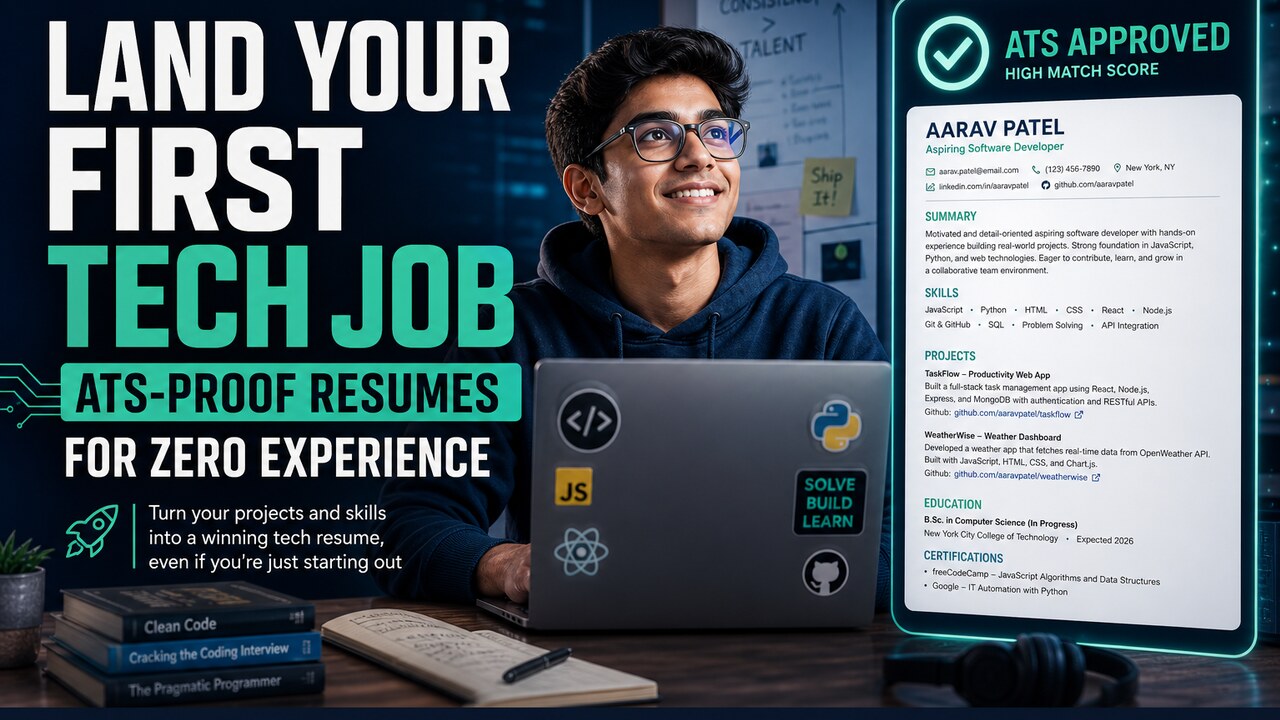
Breaking into the tech industry without prior professional experience can feel like a Catch-22. You need experience to get a job, but you need a job to get experience. The good news is that many tech companies are increasingly open to candidates who demonstrate potential through personal projects, relevant skills, and a well-crafted resume. Your resume is your first impression, and for many tech roles, it first needs to impress an Applicant Tracking System (ATS) before a human ever sees it.
Master ATS-Friendly Resume Formatting
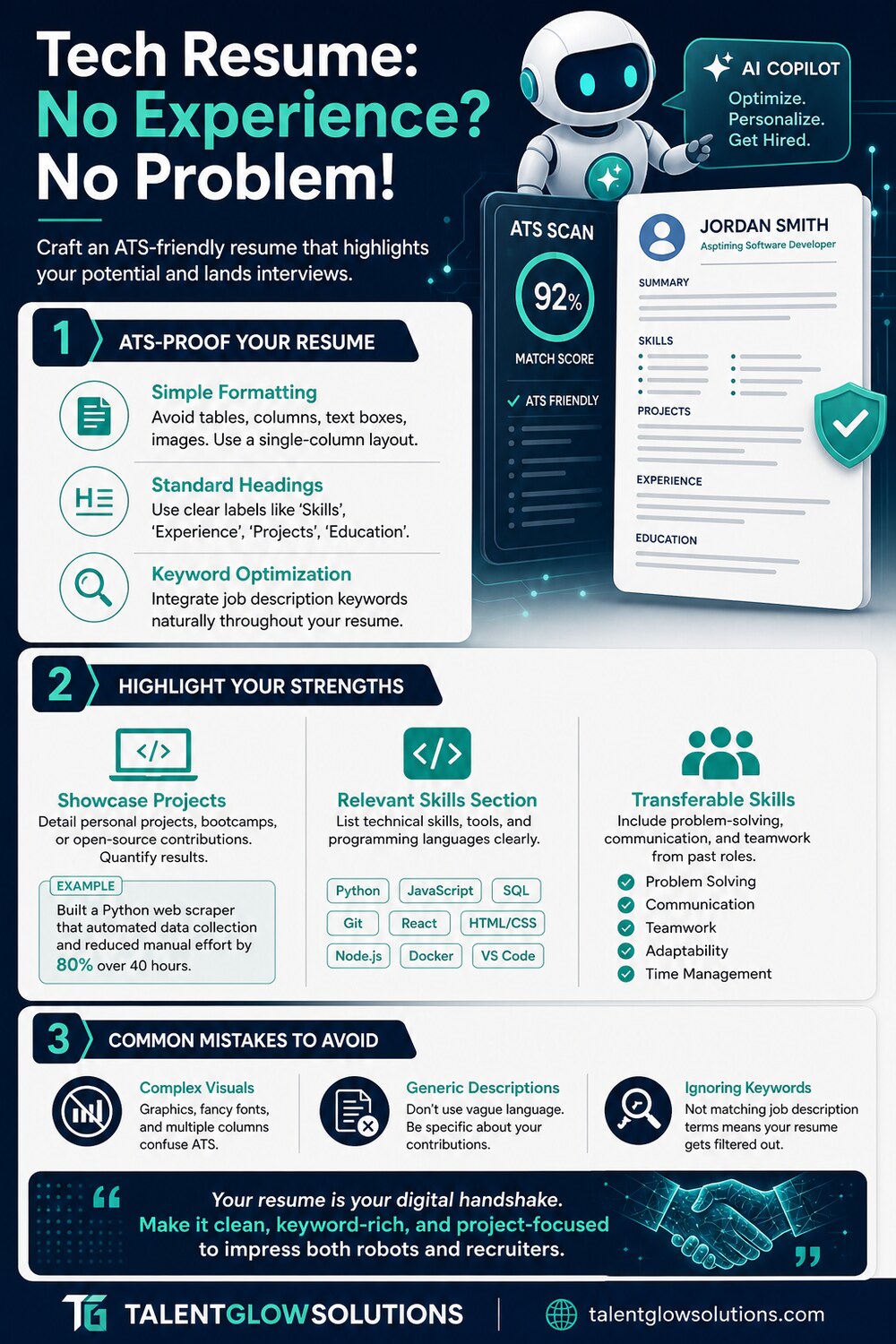
The biggest hurdle for many entry-level candidates is the Applicant Tracking System (ATS). These software programs scan, parse, and rank resumes based on keywords and formatting. If your resume isn't ATS-friendly, it might never reach a hiring manager's desk. To ensure your resume passes this initial gate, keep your formatting simple and straightforward.
- Avoid Complex Visuals: Steer clear of tables, columns, text boxes, images, or graphics. These elements can prevent ATS from correctly parsing your resume, leading to crucial information being missed or scrambled. Fancy designs often get flagged as unreadable. (career.grinnell.edu)
- Single-Column Layout: Utilize a clean, single-column layout. This structure is universally recognized by ATS and ensures all your information is read in the intended order. (capd.mit.edu)
- Standard Headings: Use clear, standard headings like "Skills," "Experience," "Projects," "Education," and "Contact Information." These labels help ATS categorize your information correctly. (career.grinnell.edu)
Highlight Your Projects, Not Just Past Jobs
When you lack traditional work experience, your projects become your primary experience. This is where you demonstrate your practical skills and passion for technology. Recruiters want to see what you can do, not just what you've studied.
- Showcase Personal Projects: Detail any personal coding projects, open-source contributions, hackathon participations, or projects from bootcamps or online courses. For each project, clearly state the technologies used, your role, and the impact or outcome. This provides tangible evidence of your abilities.
- Quantify Achievements: Even in projects, use numbers to show impact. Did your project reduce processing time by X%? Did you implement Y features? Quantifying your contributions makes them more impressive and memorable.
- Provide Links: Include active links to your GitHub repository, personal website, or live demo of your project. This allows recruiters to directly view your work and code quality. Ensure these links are functional before submitting.
Tailor Keywords to the Job Description
One of the most critical steps in creating an ATS-proof resume is keyword tailoring. Every job description is a goldmine of keywords that the ATS is programmed to look for. Ignoring these is a surefire way to get filtered out.
- Analyze the Job Description: Read the job posting carefully and identify key skills, tools, technologies, and responsibilities mentioned. These are the keywords you need to integrate into your resume.
- Integrate Keywords Naturally: Weave these keywords into your skills section, project descriptions, and even your summary statement. Don't just list them; show how you've applied them. For example, instead of just
Sources
Frequently asked questions
How important is an ATS-friendly resume for tech jobs?
It's extremely important. Most large and even many smaller companies use Applicant Tracking Systems (ATS) to filter resumes. If your resume isn't formatted correctly or lacks relevant keywords, it may never be seen by a human recruiter, regardless of your qualifications.
What kind of projects should I include if I have no experience?
Include personal coding projects, academic projects, contributions to open-source software, projects from bootcamps, or even small freelance work. Focus on projects that demonstrate the skills relevant to the jobs you're applying for, and provide links to your work (e.g., GitHub).
Should I include a resume summary or objective statement?
Yes, a concise summary or objective is highly recommended, especially for entry-level candidates. Use it to highlight your key skills, career aspirations, and what you can bring to the role, while also incorporating relevant keywords from the job description.
How do I list my skills effectively on a tech resume?
Create a dedicated 'Skills' section with clear categories (e.g., Programming Languages, Frameworks, Tools, Cloud Platforms). List specific technologies you are proficient in. Avoid vague terms and ensure the skills align with those in the job description.
What are the most common resume mistakes for tech newcomers?
Common mistakes include using complex formatting that confuses ATS, not tailoring the resume to each job description, failing to highlight projects adequately, and including irrelevant information instead of showcasing transferable skills and learning aptitude.
Ready to launch your career?
For comprehensive guidance and hands-on project experience, explore mentor-led, project-based training programs designed to help you build a strong foundation for a tech career.
Explore Programs Talk to us