SAP News
Unpacking SAP Value Chain Analysis (VCA) in RISE with S/4HANA
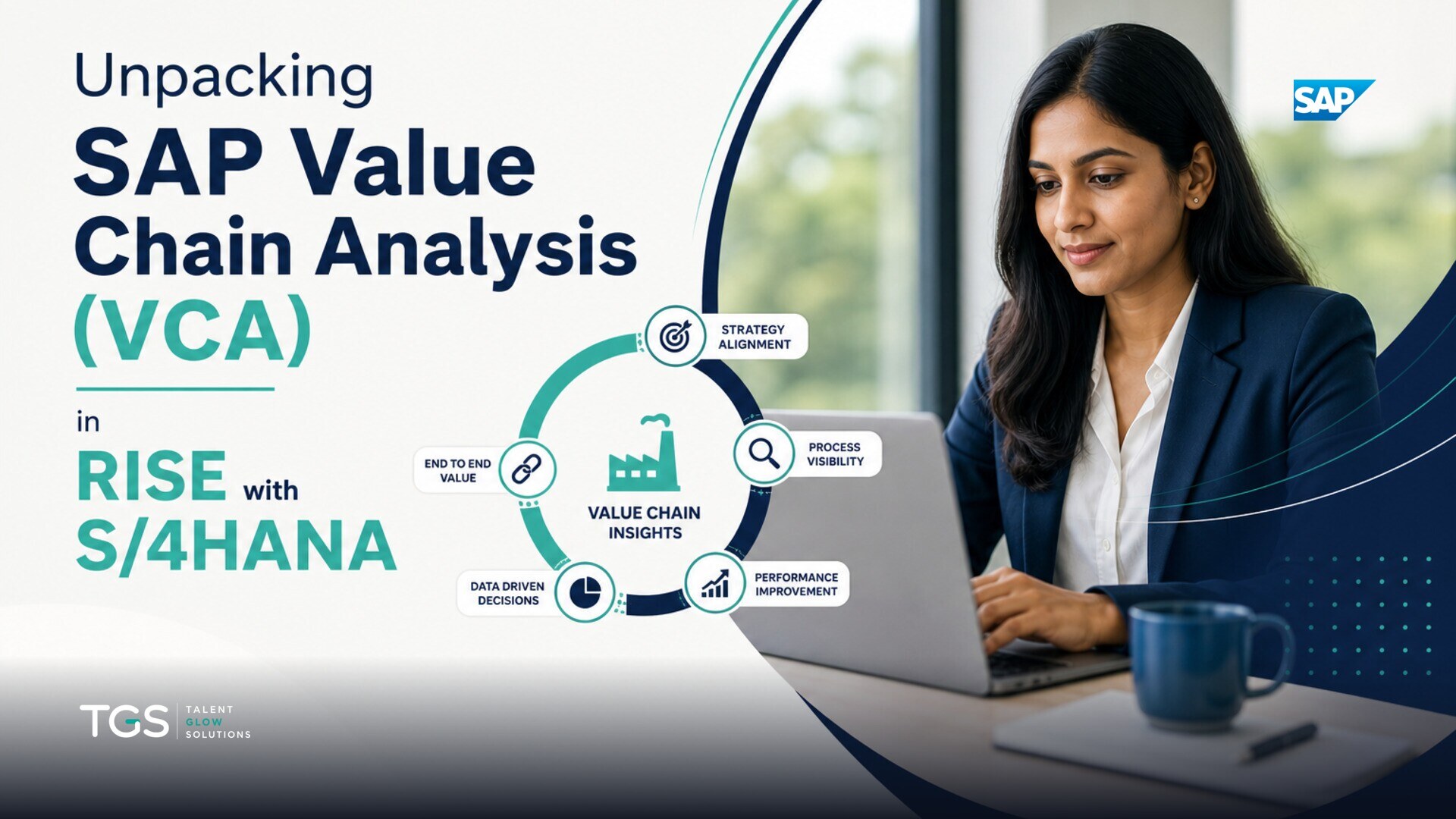
A recent SAP Community blog post, published on November 25, 2026, highlighted the strategic importance of SAP Value Chain Analysis (VCA) within the RISE with SAP - Bill of Materials. This discussion underscores how SAP's core S/4HANA Private Cloud ERP distinguishes itself from competitors, particularly through included features like VCA. For organizations seeking to optimize financial and carbon value flows, understanding VCA's capabilities is essential.
What is SAP Value Chain Analysis (VCA)?
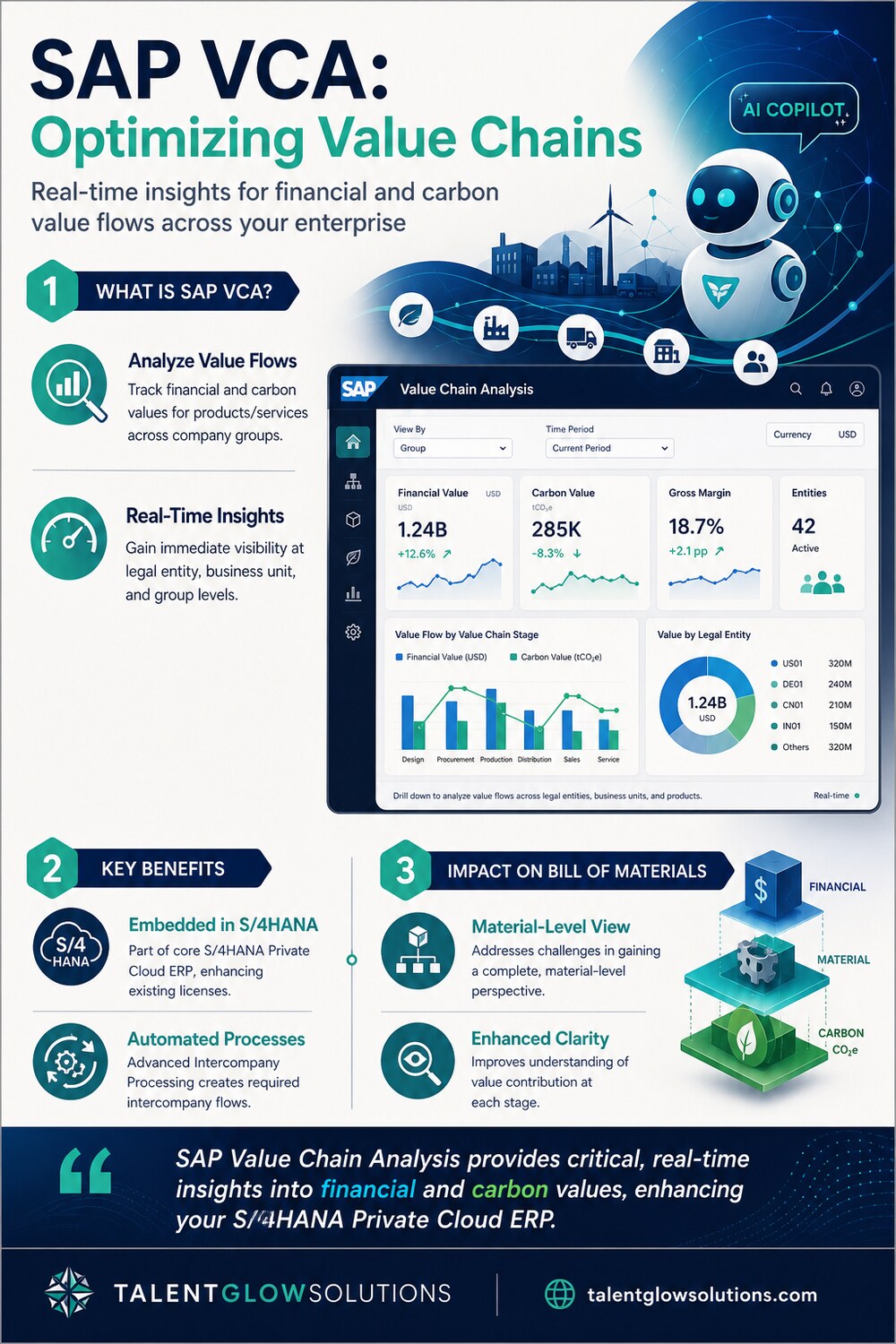
SAP Value Chain Analysis (VCA) is a solution designed to provide organizations with a comprehensive view of value flows. It allows for the analysis of products or services across a group of companies. This analysis delivers real-time insights into both financial and carbon values, accessible at legal entity, business unit, and group levels.
This functionality helps businesses understand the true cost and environmental impact at each stage of their value chain. It’s particularly beneficial for complex multinational corporations or diversified business groups. The ability to monitor these values in real-time enables quicker, more informed decision-making.
How does VCA enhance S/4HANA Private Cloud ERP?
VCA is an integral part of the core S/4HANA Private Cloud ERP, positioning it as a robust solution for enterprises. It exemplifies how SAP's offerings provide significant value within the standard license. Many features are already included, such as Advanced Intercompany Processing.
This embedded solution automatically creates the necessary intercompany processes in the background, simplifying complex transactions. The latest release, S/4HANA 2025 (FPS1), further expands this functionality by introducing multi-stage intercompany processes, enhancing automation and efficiency.
Why is VCA crucial for the Bill of Materials (BOM)?
Integrating VCA into the Bill of Materials (BOM) addresses a significant challenge for many organizations. It helps in gaining a complete, material-level view of value flows. This means businesses can understand the financial and carbon contributions of individual components and raw materials.
Without VCA, achieving this granular level of insight can be difficult, leading to inefficiencies and unclear costing. By providing this detailed perspective, VCA supports better product costing, supply chain optimization, and sustainability reporting.
What are the key benefits of implementing VCA?
Implementing SAP VCA offers several key benefits for organizations. It provides unparalleled transparency into financial and carbon value flows, enabling better strategic planning. This includes improved accuracy in profitability analysis and enhanced compliance with environmental regulations.
- Real-time Insights: Access up-to-the-minute data on financial and carbon values. This allows for proactive management and immediate adjustments.
- Automated Intercompany Processes: Reduce manual effort and potential errors in complex intercompany transactions. The system handles the creation of these processes automatically.
- Holistic View: Gain a comprehensive understanding of value contribution at every level - from individual materials to the entire group of companies.
- Enhanced Decision-Making: Equip leadership with precise data for strategic decisions related to pricing, sourcing, and sustainability initiatives.
How does VCA support sustainability initiatives?
SAP VCA plays a vital role in an organization's sustainability initiatives by providing real-time carbon value insights. This allows companies to track and analyze the carbon footprint associated with products and services throughout their value chain. Understanding these impacts is crucial for setting and achieving environmental goals.
By identifying carbon hotspots, businesses can implement targeted strategies to reduce emissions. This not only contributes to environmental protection but also enhances corporate social responsibility and meets increasing regulatory demands for carbon reporting.
How does VCA compare to traditional value analysis methods?
Traditional value analysis often relies on periodic, aggregated data, which can lead to delays and a lack of granular insight. SAP VCA, in contrast, offers a dynamic, real-time approach. This table highlights key differences:
| Feature | Traditional Value Analysis | SAP Value Chain Analysis (VCA) |
|---|---|---|
| Data Frequency | Periodic, often monthly or quarterly | Real-time, continuous updates |
| Scope of Data | Primarily financial, often aggregated | Financial and carbon values, granular to material level |
| Intercompany | Manual or semi-automated processes | Embedded, automated intercompany processing |
| Insights Level | High-level, retrospective | Legal entity, business unit, and group levels, proactive |
| Decision Speed | Slower, based on historical data | Faster, supports immediate strategic adjustments |
What does VCA mean for SAP learners and consultants?
For SAP learners and consultants, the emergence of SAP VCA within S/4HANA Private Cloud ERP signifies an evolving landscape. Proficiency in VCA will become increasingly valuable, especially for those in finance, controlling, and supply chain roles. Understanding how to implement and leverage VCA's capabilities will be a key differentiator in the job market.
Future SAP professionals should focus on mastering the intricacies of S/4HANA, including its advanced functionalities like VCA and automated intercompany processing. This knowledge will enable them to support organizations in optimizing their value chains and driving sustainable growth. Training that includes hands-on experience with live S/4HANA systems will be particularly beneficial.
Sources
Frequently asked questions
What kind of data does SAP VCA analyze?
SAP VCA analyzes both financial and carbon values for products or services. It provides real-time insights across various organizational levels, including legal entity, business unit, and the entire group of companies.
Is SAP VCA an add-on or part of the core S/4HANA?
SAP VCA is a core component of the S/4HANA Private Cloud ERP. It is included as part of the core license, enhancing the value proposition of the standard S/4HANA offering without requiring separate purchases for its fundamental features.
How does VCA help with intercompany transactions?
VCA includes Advanced Intercompany Processing, an embedded solution that automatically generates the necessary intercompany processes. This automation streamlines complex multi-stage intercompany transactions, reducing manual effort and improving accuracy.
Can SAP VCA provide insights at a material level?
Yes, a primary benefit of VCA is its ability to address the challenge of gaining a complete, material-level view of value flows. This allows organizations to understand the financial and carbon contributions of individual components within their Bill of Materials.
Ready to launch your career?
For aspiring SAP professionals, mastering these advanced S/4HANA functionalities is crucial, and TalentGlowSolutions provides mentor-led training and 100% placement assistance (we do not guarantee a job) to help you excel.
Explore Programs Talk to us