Career Guide
How to Start a Career in Cyber Security Without a Degree

Embarking on a career in cybersecurity can seem daunting, especially if you don't have a traditional computer science degree. However, the good news is that there are many viable and successful paths to enter this dynamic field. With dedication and strategic learning, you can build the necessary skills and experience to thrive in cybersecurity.
This guide will walk you through how to start a career in cyber security, focusing on practical steps, essential certifications, and valuable hands-on experience that can open doors to exciting opportunities.
Diverse Paths to Cybersecurity Entry
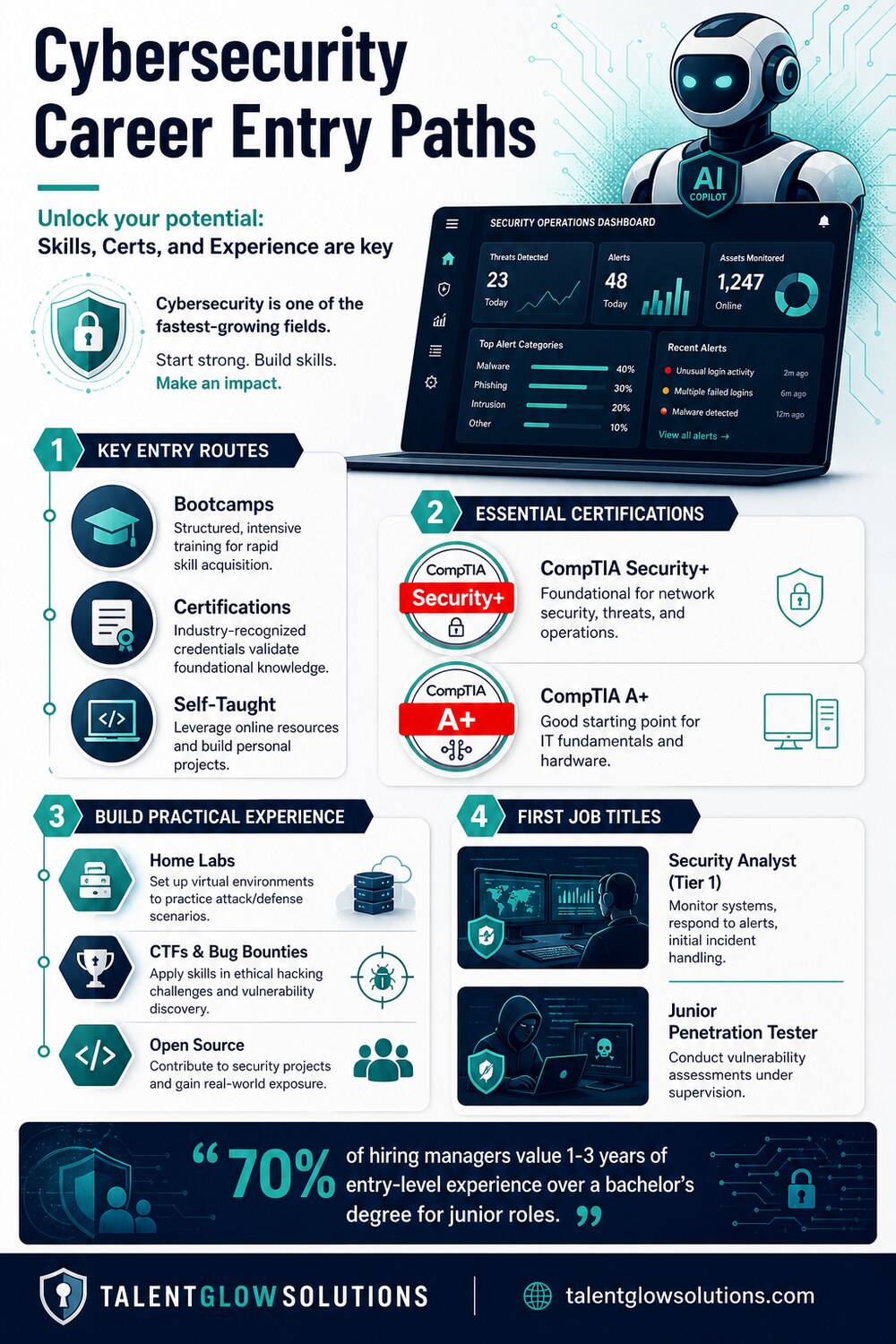
Many individuals successfully transition into cybersecurity without a formal computer science degree. The field values practical skills and demonstrated ability over traditional academic credentials. This flexibility means you have multiple avenues to explore.
- Bootcamps: These intensive programs provide focused, accelerated training in specific cybersecurity domains.
- Professional Certifications: Industry-recognized certifications validate your knowledge and skills to potential employers.
- Self-Taught Paths: Leveraging online resources, tutorials, and personal projects can build a strong foundation.
Why Certifications Matter
For those without a CS degree, certifications are often the gold standard for demonstrating foundational knowledge. They provide a structured learning path and a verifiable credential that employers recognize. Certifications prove you've mastered specific cybersecurity concepts and practices.
| Certification | Focus | Benefit |
|---|---|---|
| CompTIA A+ | IT fundamentals, hardware, software | Builds basic tech literacy |
| CompTIA Security+ | Core security concepts, threats, ops | Industry-recognized entry-level security |
| CompTIA Network+ | Network infrastructure, protocols | Essential for understanding cyber threats |
| (ISC)² CCSP | Cloud security architecture, operations | Specializes in securing cloud environments |
The CompTIA Security+ certification is particularly crucial for anyone looking to start a career in cyber security. It covers a broad range of topics including network security, threats and vulnerabilities, access control, cryptography, and risk management.
Building Your Practical Experience: Home Labs
Employers highly value hands-on experience. One of the most effective ways to gain this is by setting up a cybersecurity home lab. This allows you to experiment with various tools, simulate attacks, and practice defensive strategies in a safe, controlled environment.
Here are steps to create a basic home lab:
- Choose Virtualization Software: Install VirtualBox or VMware Workstation Player on your computer.
- Download Operating Systems: Acquire ISOs for Kali Linux (for penetration testing) and a vulnerable OS like Metasploitable2 or a Windows Server trial (for targets).
- Create Virtual Machines: Set up separate VMs for your attacker machine (Kali) and target machines. Ensure they can communicate within a private network.
- Practice Common Scenarios: Perform vulnerability scanning, password cracking, network sniffing, and basic exploit attempts. Document your findings and methods.
Entry-Level Job Titles and What They Do
Knowing what entry-level roles exist can help you tailor your learning and job search. These positions are designed for individuals who are just starting out and provide valuable on-the-job experience.
- Tier 1 Security Analyst (SOC Analyst): Monitors security systems, analyzes alerts, and performs initial incident response. This is a common first step.
- Junior Penetration Tester: Works under supervision to conduct vulnerability assessments and penetration tests. Requires strong technical skills.
- IT Support Specialist with a Security Focus: Resolves technical issues while implementing basic security best practices.
- Security Administrator: Manages and maintains security systems like firewalls, intrusion detection systems, and antivirus software.
The Importance of Soft Skills
While technical skills are paramount, soft skills are equally critical for success in cybersecurity. These include communication, problem-solving, and critical thinking. Cybersecurity often involves explaining complex technical issues to non-technical stakeholders and collaborating within a team.
- Communication: Clearly articulate threats, vulnerabilities, and solutions.
- Problem-Solving: Analyze security incidents and devise effective mitigation strategies.
- Attention to Detail: Spot anomalies and potential security risks that others might miss.
- Continuous Learning: The threat landscape evolves constantly, requiring ongoing education.
The Value of Experience Over Degrees
Recent research underscores the shifting priorities in hiring. According to ISC2, 70% of hiring managers now prioritize one to three years of entry-level experience over a bachelor's degree when evaluating candidates for junior cybersecurity roles. This statistic highlights the importance of practical application and real-world exposure.
This trend means that focused training, certifications, and hands-on projects can be just as, if not more, impactful than a four-year degree. Building a robust portfolio of projects and demonstrating your capabilities through certifications directly addresses this employer demand.
Mentorship and Project-Based Learning
For aspiring cybersecurity professionals, especially those without a traditional background, mentor-led and project-based training can be incredibly beneficial. This approach provides structured guidance, allowing you to learn by doing and build a portfolio of relevant projects. Working on real-world scenarios under the guidance of experienced professionals helps bridge the gap between theoretical knowledge and practical application, preparing you for the demands of the job market.
Continuous Learning and Staying Current
The cybersecurity landscape is constantly evolving, with new threats and technologies emerging regularly. Therefore, continuous learning is not just a suggestion but a necessity. Regularly update your skills, pursue advanced certifications, and stay informed about industry trends.
- Follow Security News: Subscribe to cybersecurity blogs, newsletters, and threat intelligence feeds.
- Participate in CTFs: Capture The Flag challenges help you hone your offensive and defensive skills.
- Network with Peers: Join professional organizations and online communities to share knowledge and insights.
- Advanced Certifications: Once you have foundational experience, consider specialized certs like CySA+, CEH, or OSCP.
Conclusion: Your Cybersecurity Journey Awaits
Starting a career in cyber security without a computer science degree is not only possible but increasingly common. By focusing on foundational certifications like CompTIA Security+, building practical experience through home labs and projects, and understanding entry-level roles, you can effectively launch your career. The key is a proactive approach to learning and a commitment to continuous skill development.
Sources
Frequently asked questions
Do I need a computer science degree to get into cybersecurity?
No, a computer science degree is not always required. Many successful cybersecurity professionals enter the field through bootcamps, certifications, and self-taught paths. Practical experience and relevant certifications are highly valued by employers.
What is the best entry-level certification for cybersecurity?
The CompTIA Security+ certification is widely considered one of the best entry-level certifications. It covers fundamental cybersecurity concepts and is recognized across the industry as a strong foundation.
How important is hands-on experience for a cybersecurity career?
Hands-on experience is extremely important. ISC2 research indicates that 70% of hiring managers value one to three years of entry-level experience over a bachelor's degree for junior roles. Building a home lab and working on projects are great ways to gain this.
What kind of projects can I do to gain cybersecurity experience?
You can set up a cybersecurity home lab to practice simulating attacks, defending systems, and using security tools. Participating in Capture The Flag (CTF) challenges and contributing to open-source security projects are also excellent ways to gain practical experience.
What are common first jobs in cybersecurity?
Common entry-level job titles include Tier 1 Security Analyst (SOC Analyst), Junior Penetration Tester, and Security Administrator. These roles offer opportunities to apply foundational skills and gain crucial on-the-job experience.
Ready to launch your career?
TalentGlowSolutions provides mentor-led, project-based training to help aspiring professionals build the skills and portfolio needed for a successful career in cybersecurity.
Explore Programs Talk to us