Career Roadmap
Build a Strong SAP Portfolio with No Experience
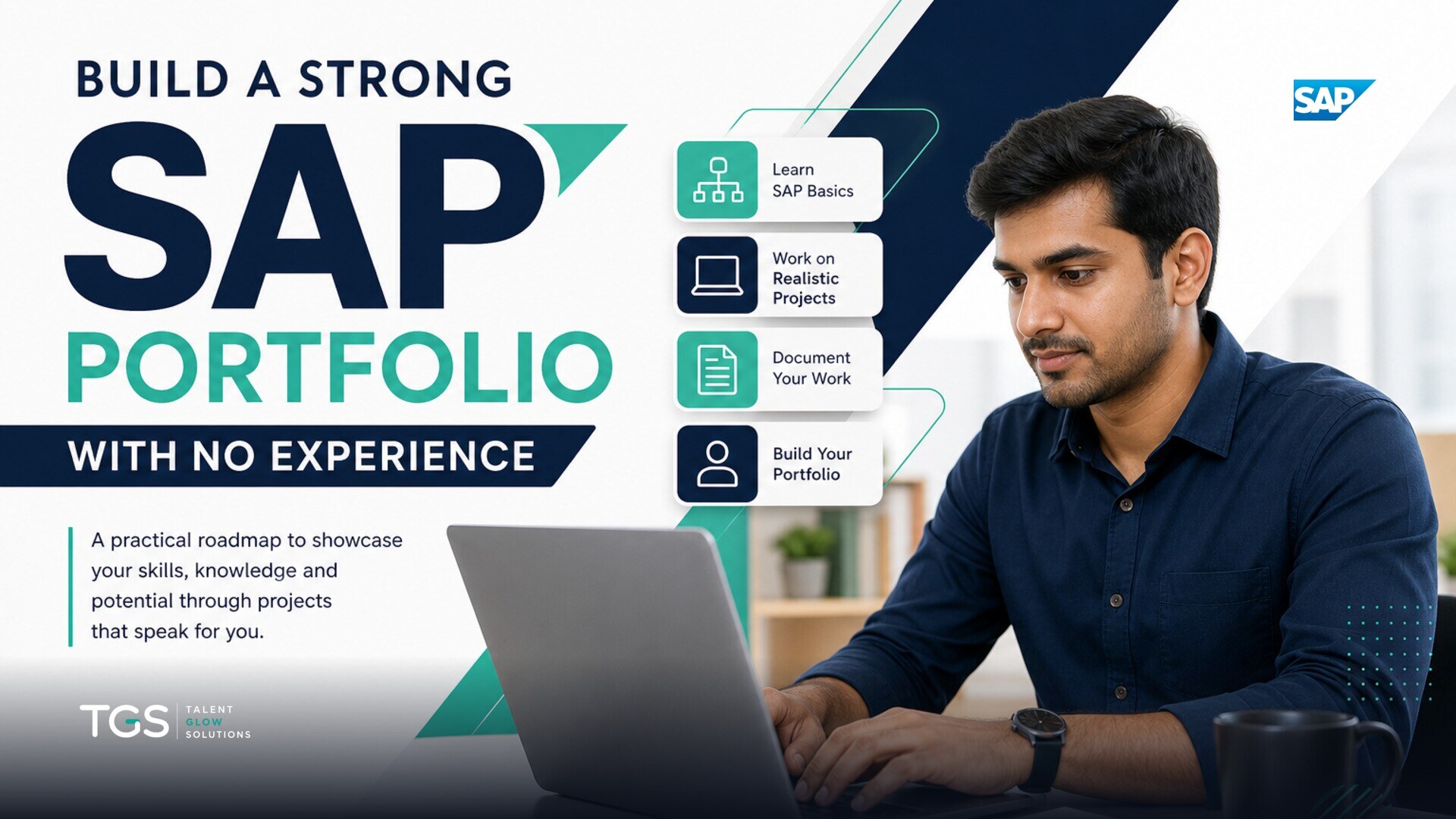
Landing your first SAP role can feel challenging, especially if you lack traditional work experience. However, a well-crafted portfolio showcasing your training and project work can effectively bridge this gap. This guide will show you how to build a portfolio with no SAP work experience, turning your learning into a powerful asset for interviews.
What Should an SAP Portfolio Include for Beginners?
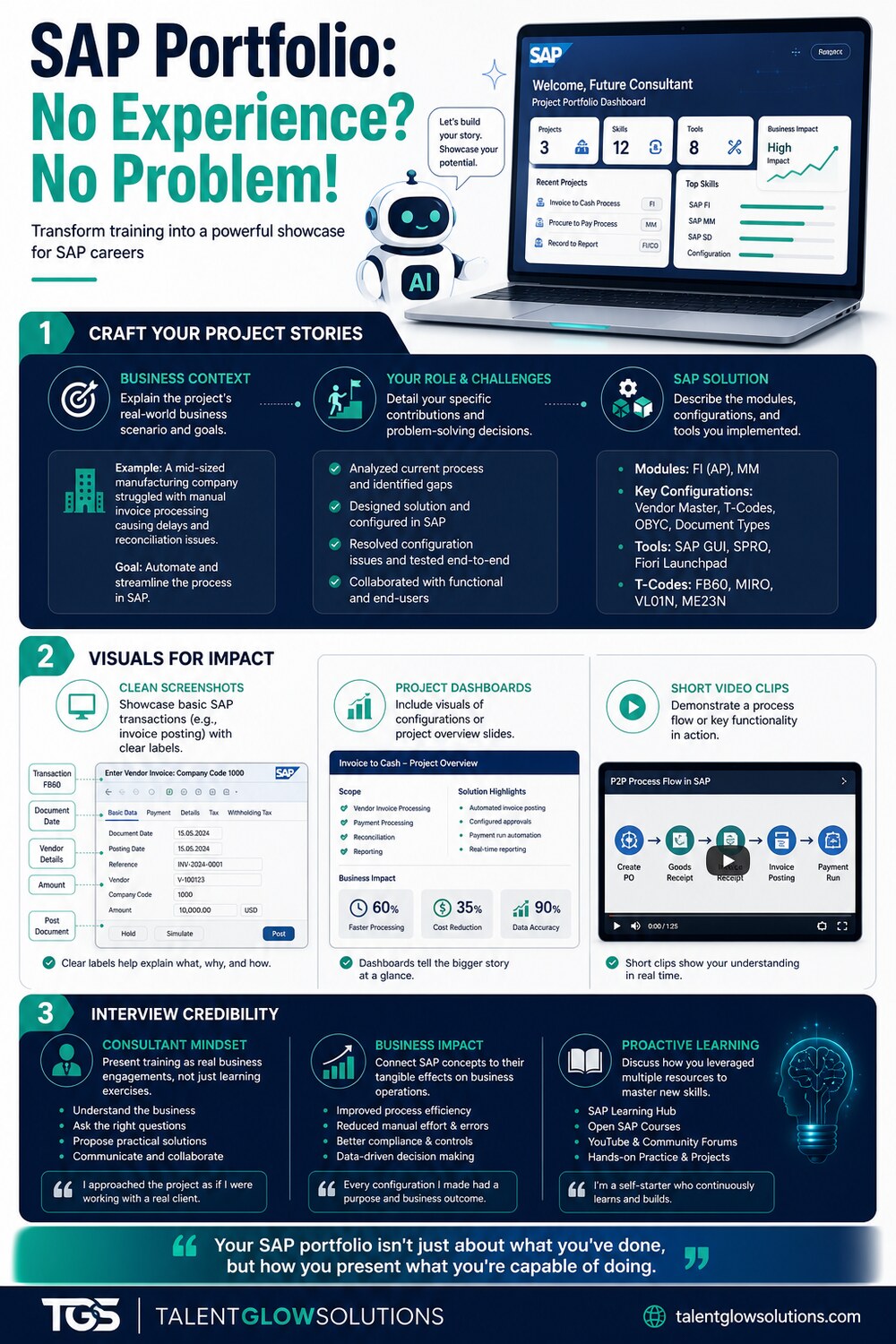
An effective SAP portfolio for beginners should highlight your practical skills and understanding, even without live system experience. Focus on demonstrating your ability to perform basic SAP transactions and configure settings. A "mini SAP portfolio" is ideal, featuring neatly labeled screenshots of actions like posting an invoice or creating a sales order, each with a brief explanation (finivian.com).
Your portfolio should be engaging and visually rich. Incorporate visuals such as images, infographics, or short video clips to make your presentation dynamic. Screenshots of SAP configurations, project dashboards, or presentation slides can be very effective in illustrating your capabilities (finivian.com).
How Do I Structure My SAP Project Write-Ups?
Structuring your project write-ups clearly helps interviewers understand your contributions and thought process. Each write-up should detail the project's context, the specific challenges addressed, your unique role, the approach taken, and the SAP solution implemented (gauravconsulting.com).
Be sure to include specific details about the tools, modules, customizations, and configurations you utilized within SAP. Present these training projects as if they were real business engagements, rather than simple learning exercises, to demonstrate a consultant's mindset (finivian.com).
How Can I Talk About Training Projects Credibly in an Interview?
When discussing your training projects, adopt a consultant's mindset to enhance your credibility. Frame your experiences as real business engagements, focusing on problem-solving and outcomes (finivian.com). This approach helps interviewers see your potential to contribute to their team.
Utilize a structured, four-part project story framework to articulate your experiences effectively (gauravconsulting.com). This framework ensures you cover all critical aspects of your project concisely and compellingly.
The Four-Part Project Story Framework
| Section | Description |
|---|---|
| Business Context | Explain the initial business scenario, the client's needs, or the problem the project aimed to solve. This sets the stage for your work. |
| Your Role | Clearly define your specific responsibilities and contributions within the project. Emphasize what you did, not just what the team accomplished. |
| Challenges & Decisions | Describe any obstacles you faced during the project and the decisions you made to overcome them. This highlights your problem-solving skills and critical thinking. |
| The Outcome | Detail the results of your work. How did your SAP solution address the business context? What was the impact? Focus on measurable or qualitative improvements. |
How Do I Demonstrate Business Impact Without Real-World Experience?
Demonstrating business impact is crucial for building credibility. Connect SAP concepts directly to their business implications during interviews (gauravconsulting.com). For example, explain how expense postings in Controlling (CO) integrate with the General Ledger (FI) to enable real-time financial reporting.
This approach shows you understand not just how SAP functions, but also why those functions matter to a business's operations and decision-making. Highlighting these connections proves your ability to think beyond technical tasks. The TalentGlowSolutions project-based training emphasizes this critical link between technical skills and business outcomes.
What if I Only Have Associate Certifications?
SAP associate (C_) certifications are specifically designed as the entry-level tier for individuals new to a particular SAP topic (erpprep.com). These certifications validate foundational knowledge and are a strong starting point for your portfolio. They demonstrate a commitment to formal learning.
It's important to remember that 2026 SAP certification exams are performance-based, involving System-Based and Scenario-Based assessments (erpprep.com). This means hands-on practice in a sandbox environment is more critical than mere memorization. Showcase your practice through screenshots and project descriptions.
How Can I Show Proactive Learning?
Interviewers value candidates who demonstrate a proactive learning strategy. Explain how you leveraged multiple resources to acquire new SAP skills (gauravconsulting.com). This includes online training, networking with professionals, and consistent hands-on practice in a sandbox environment.
Detailing your learning journey shows initiative and a strong desire to grow in the SAP field. For instance, you could describe how you used a combination of mentor-led guidance and self-study to master a particular module. TalentGlowSolutions provides mentor-led, project-based training that fosters this kind of proactive skill development.
What Types of Visuals Make a Portfolio Engaging?
To make your portfolio truly stand out, use a variety of engaging visuals. Clean, neatly labeled screenshots of basic SAP transactions are essential (finivian.com). These could include steps for creating a purchase order in MM, processing a sales order in SD, or running a report in FICO.
Consider adding short video clips that demonstrate a process flow or key functionality within SAP. Infographics summarizing project structures or system landscapes can also be highly effective (finivian.com). The goal is to make your technical explanations easily digestible and visually appealing.
Sources
Frequently asked questions
Can I get an SAP job with no prior work experience?
Yes, it is possible to land an SAP job without prior work experience by building a strong portfolio that showcases your training projects, hands-on practice, and understanding of business impact. Emphasizing your proactive learning and consultant mindset in interviews is key.
What's the best way to present my training projects in an interview?
Present your training projects as real business engagements, not just learning exercises. Use the four-part project story framework: Business Context, Your Role, Challenges and Decisions, and The Outcome. This structure helps you articulate your contributions and problem-solving skills effectively.
How can I prove my SAP skills without having worked on a live system?
You can prove your skills by including a "mini SAP portfolio" with clean, labeled screenshots of basic SAP transactions and configurations from your sandbox environment. Accompany these visuals with clear explanations and connect them to their business impact during interviews.
Are SAP associate certifications enough to get an entry-level job?
SAP associate certifications are designed for individuals new to a topic and are an excellent starting point. Combined with a robust portfolio showcasing hands-on project work and an understanding of business application, they significantly strengthen your candidacy for entry-level roles.
Ready to launch your career?
For personalized support and mentorship in building your SAP expertise and portfolio, explore TalentGlowSolutions's project-based training tracks.
Explore Programs Talk to us