Career Growth
Mastering Your First Tech Salary Offer: Scripts & Strategies

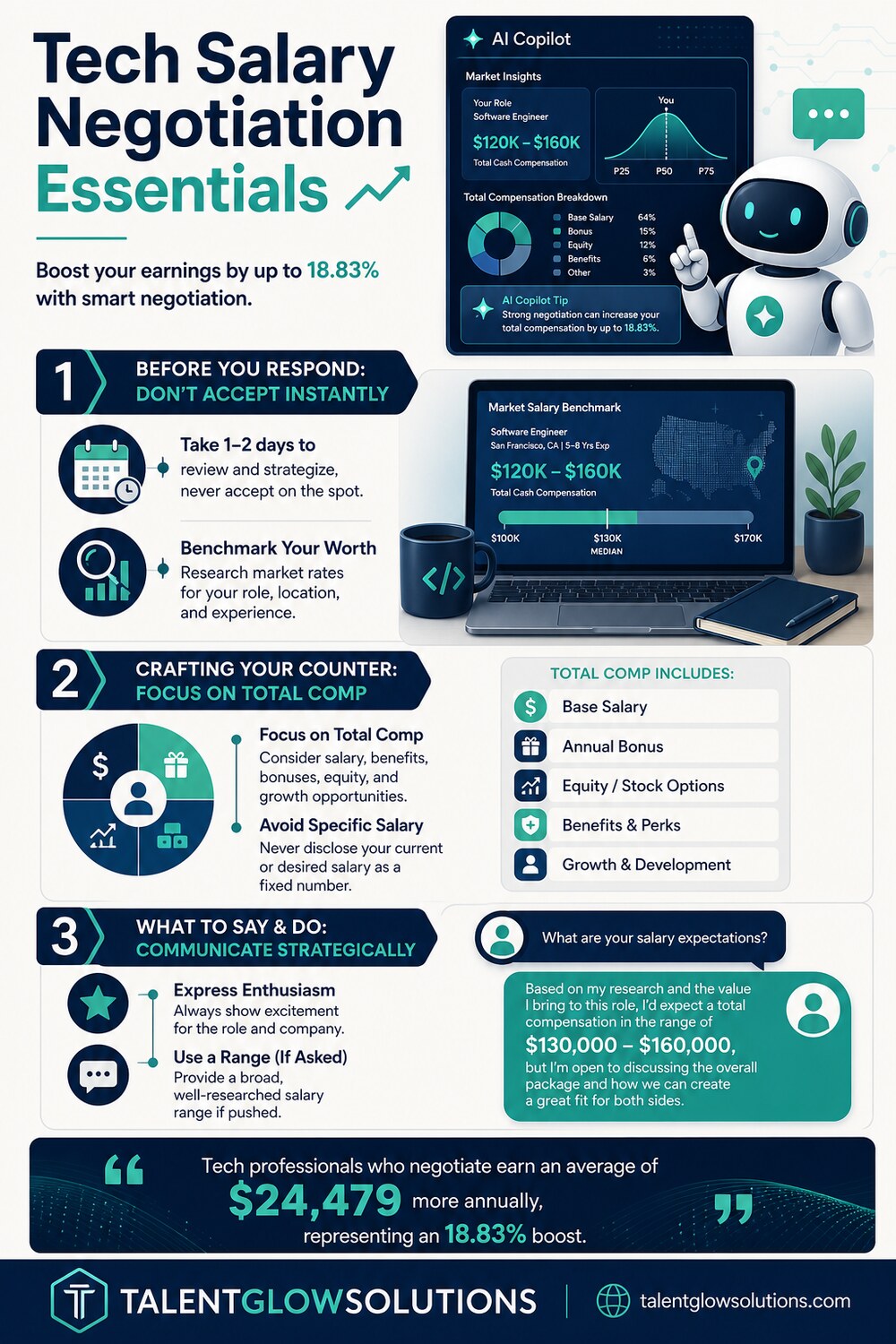
Landing a tech job offer is exciting, but the real work begins when you receive that first compensation package. Knowing how to negotiate a tech salary effectively can significantly impact your long-term financial growth. Tech professionals who negotiate earn an average of $24,479 more annually, representing an 18.83% boost compared to accepting the first offer. This article will equip you with actionable strategies and scripts to confidently approach your first tech salary negotiation.
Don't Accept the First Offer Immediately
The most important rule in salary negotiation is to never accept a job offer on the spot. Even if the offer seems fantastic, always take a day or two to review it thoroughly. This pause allows you to strategically plan your next move without feeling pressured. Use this time to calm your excitement and objectively assess the offer against your research.
- Take a Breath: Resist the urge to say yes immediately. Express gratitude for the offer and ask when they need a decision.
- Strategic Review: Use the time to research, consult mentors, and prepare your counter-offer.
- Regain Control: This step shifts power dynamics, allowing you to approach the conversation from a position of thought, not impulse.
Benchmark Your Value with Research
Before you can effectively negotiate, you need to understand your market value. This involves researching typical compensation for similar roles, locations, and experience levels. Tools like Glassdoor, LinkedIn, and industry-specific salary reports are invaluable resources. Knowing what others in your position earn provides a strong foundation for your negotiation.
- Role Specifics: Look for data on the exact job title and responsibilities.
- Geographic Data: Salaries vary significantly by city and region.
- Experience Level: Differentiate between entry-level, mid-career, and senior positions.
- Company Size: Larger companies often have different compensation structures than startups.
Understanding Total Compensation
When you receive an offer, it's crucial to look beyond the base salary. Total compensation includes a variety of components that add significant value. This holistic view allows you to negotiate for elements that are most important to you, even if the base salary has limited flexibility. Always consider the full picture of what's being offered.
| Component | Description |
|---|---|
| Base Salary | Your annual gross pay. |
| Bonuses | Performance-based or signing bonuses. |
| Equity | Stock options or restricted stock units (RSUs). |
| Benefits | Health, dental, vision insurance, retirement plans. |
| PTO | Paid time off, including vacation and sick days. |
| Perks | Professional development, remote work stipends, gym. |
Crafting Your Counter-Offer: What to Say
When you're ready to present your counter-offer, confidence and a clear rationale are key. Always express enthusiasm for the role and the company, then articulate your request based on your research and the value you bring. This isn't about demanding; it's about presenting a well-reasoned case for why you deserve more.
Here’s a step-by-step approach:
- Start with Enthusiasm: "Thank you so much for the offer! I'm truly excited about the opportunity to join [Company Name] as a [Job Title] and contribute to [specific project/team goal]."
- Acknowledge the Offer: "I've carefully reviewed the compensation package, and I appreciate the thought put into it."
- Present Your Research (Indirectly): "Based on my research into industry standards for this role, my unique skill set in [mention specific skills/experience], and the impact I believe I can make, I was anticipating a compensation package closer to [state a range, or a specific figure slightly above your target]."
- Focus on Total Compensation: "Specifically, I'm hoping we can discuss [mention specific areas like base salary, equity, or additional PTO] to better align with the market value for this position and my experience."
- Reiterate Value: "I am very eager to join your team and am confident that with a revised offer, I can make a significant contribution."
What Not to Say During Negotiation
Just as important as knowing what to say is understanding what to avoid. Certain phrases or disclosures can undermine your negotiation position. Never disclose your current or desired salary as a specific figure. This can limit your potential earnings and give the employer an unnecessary advantage. Keep the focus on the value you bring and market rates.
- "My current salary is X.": This anchors the negotiation to your past earnings, not your future value.
- "I need X because of my expenses.": Personal financial situations are not relevant to your market value.
- "I have another offer for Y.": While true, using another offer as a blunt instrument can seem aggressive. Frame it as being highly sought after, if you must.
- "This is my final offer.": Unless you are truly prepared to walk away, avoid ultimatums.
- "I'm really desperate for a job.": This conveys weakness and can lead to a lower offer.
Leveraging Your Skills and Experience
Your skills and experience are your most powerful leverage in a tech salary negotiation. Highlight specific projects, achievements, and unique qualifications that make you an invaluable asset. If you've completed mentor-led, project-based training, like the career support tracks offered by TalentGlowSolutions, emphasize the practical, hands-on experience and real-world projects you've mastered. This demonstrates your immediate readiness to contribute and justifies a higher compensation.
- Quantify Achievements: Use numbers and metrics to describe past successes.
- Connect Skills to Role: Explain how your specific skills directly benefit the company's goals.
- Highlight Training: Mention any specialized training or certifications that set you apart.
The Role of Mentorship and Training
For those new to the tech industry or transitioning careers, comprehensive training and mentorship are invaluable. Programs that offer placement-focused career support through project-based learning can significantly boost your confidence and negotiation power. When you're backed by robust, practical skills and guidance, you can approach salary discussions with a stronger understanding of your worth and how to articulate it. TalentGlowSolutions, for example, offers mentor-led, project-based training that prepares you with practical skills, enhancing your ability to demonstrate value in salary negotiations and throughout your career journey.
Sources
Frequently asked questions
How much more can I earn by negotiating a tech salary?
Tech professionals who negotiate their salary earn an average of $24,479 more annually, representing an 18.83% boost compared to accepting the first offer.
Should I accept a job offer on the spot?
No, you should never accept a job offer on the spot. Always take a day or two to review the offer and strategically plan your negotiation.
What should I avoid saying when negotiating my tech salary?
Avoid disclosing your current or desired salary as a specific figure. Also, don't discuss personal financial needs, use ultimatums, or express desperation.
What is 'total compensation' in a tech job offer?
Total compensation includes more than just base salary. It encompasses bonuses, equity (stock options/RSUs), health benefits, retirement plans, paid time off, and other perks like professional development.
How can I benchmark my salary for a tech role?
Benchmark your salary by researching industry standards for similar roles, locations, and your specific experience level using resources like Glassdoor and LinkedIn.
Ready to launch your career?
For expert guidance and practical skills that enhance your negotiation confidence, explore TalentGlowSolutions's mentor-led training programs.
Explore Programs Talk to us