SAP Onboarding
Building an Effective 90-Day Onboarding Plan for New SAP Hires

Hiring new SAP talent, whether a fresher or an experienced lateral, presents a unique challenge for many organizations. Without a clear onboarding strategy, new hires can struggle to integrate, leading to slower time-to-productivity and increased turnover. A structured 90-day plan offers a practical framework to ensure your new SAP professionals hit the ground running.
What is a 30-60-90 day plan for new SAP hires?
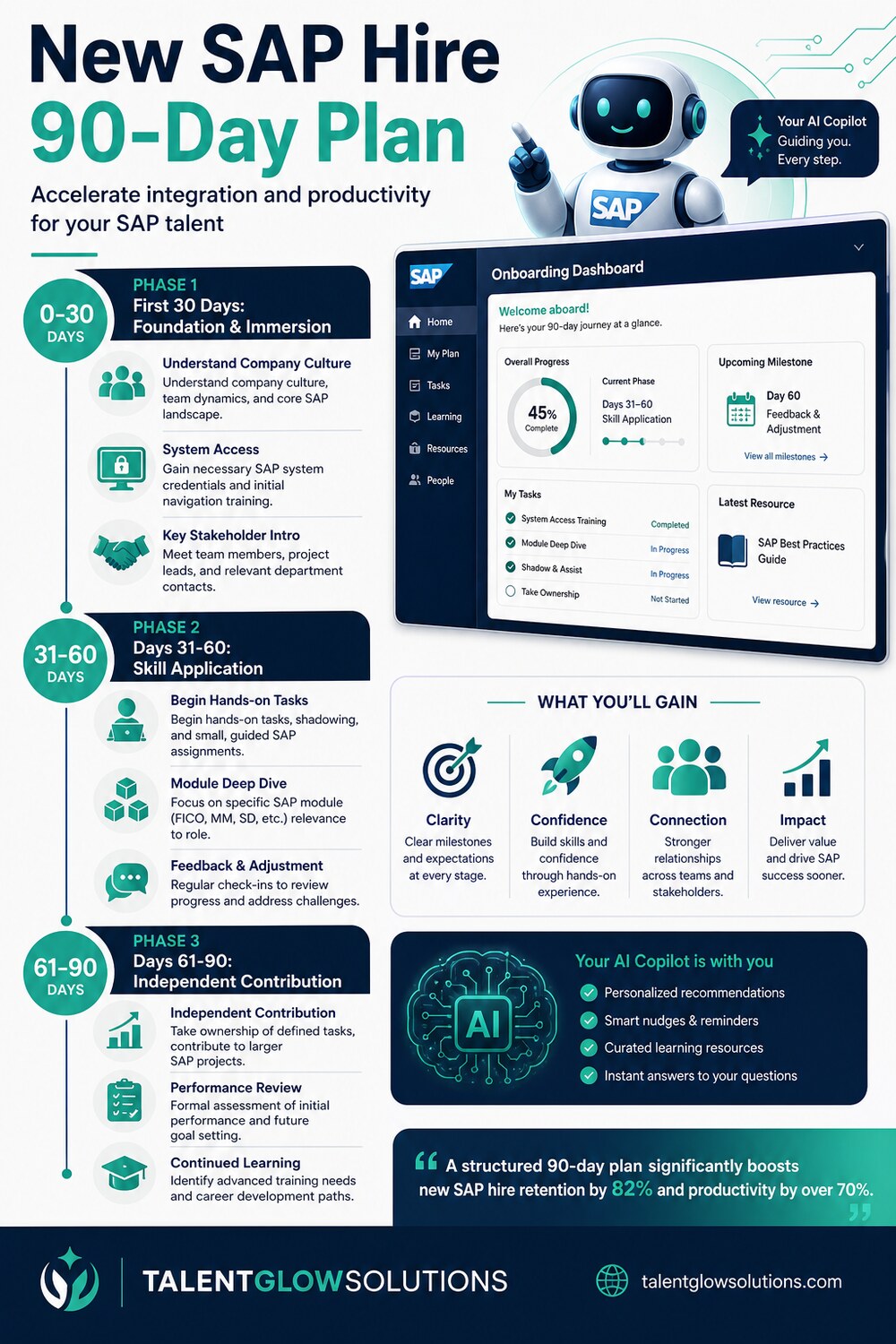
A 30-60-90 day onboarding plan is a structured roadmap that outlines clear goals, learning objectives, and performance expectations for a new employee's first three months. Its primary aim is to accelerate integration into the team and boost time-to-productivity, especially crucial for complex systems like SAP. This phased approach helps both the new hire and the organization track progress effectively.
This type of plan divides the initial onboarding period into three distinct segments, each with specific objectives. It moves from foundational learning and observation to active contribution and independent work. Organizations with strong onboarding programs, including a 90-day plan, can improve new hire retention by 82% and productivity by over 70%, according to research from Cornerstone OnDemand.
Why is a structured onboarding plan crucial for SAP professionals?
SAP environments are intricate and highly integrated, making a structured onboarding plan invaluable. New hires, even experienced ones, need to understand your specific system configurations, business processes, and team dynamics. A well-defined plan minimizes guesswork and provides a clear path to becoming a contributing member.
Without a plan, new SAP hires might feel overwhelmed, unsure of priorities, or isolated. This can lead to frustration and a longer ramp-up period, directly impacting project timelines and team efficiency. A structured approach ensures consistent support and measurable progress, which is vital for roles interacting with critical business data and operations.
What should a 30-day SAP onboarding plan include?
The first 30 days are about foundation and immersion for your new SAP hire. During this phase, the focus should be on understanding the company culture, team structure, and gaining initial access to necessary systems. This period is crucial for setting the stage for future success.
Key activities include completing HR paperwork, setting up workstations, and obtaining all required SAP system access and credentials. New hires should also be introduced to their team, key stakeholders, and understand their role within the broader SAP landscape. Schedule initial meetings with mentors or designated buddies to facilitate early integration and answer foundational questions.
- Administrative Setup: Ensure all HR and IT requirements are met.
- System Access: Provide credentials for relevant SAP modules (e.g., FICO, MM, SD) and testing environments.
- Cultural Immersion: Introduce company values, team norms, and communication channels.
- Initial Training: Overview of the company's specific SAP landscape and basic navigation.
- Goal Setting: Discuss initial expectations and set achievable learning goals for the first month.
How to structure the 60-day phase for SAP skill development?
Days 31-60 shift towards hands-on application and skill development within your SAP environment. The new hire should begin to move beyond observation and start engaging with actual tasks under supervision. This is where their theoretical knowledge begins to translate into practical experience.
Assign small, guided tasks related to their specific SAP module. For example, an SAP MM consultant might shadow a purchase order creation process, while an SAP FICO analyst could assist with basic financial postings. Regular check-ins and feedback sessions are essential to address challenges and reinforce learning. Encourage them to ask questions and explore the system.
| Focus Area | Activities | Expected Outcome |
|---|---|---|
| Module Deep Dive | Shadowing experienced users in specific SAP FICO, MM, SD, PP, EWM, BASIS, or ABAP processes. | Deeper understanding of module-specific transactions and configurations. |
| Guided Tasks | Performing small, supervised tasks within the live or test SAP system. | Initial practical experience and confidence building. |
| Feedback Loops | Weekly one-on-one meetings with manager/mentor to discuss progress and challenges. | Identification of knowledge gaps and areas for improvement. |
| Documentation | Reviewing existing process documentation and relevant knowledge base articles. | Familiarity with company-specific SAP procedures. |
What are the key objectives for the 90-day mark?
By days 61-90, the goal is for the new SAP hire to achieve independent contribution to their role. They should be able to perform a significant portion of their core responsibilities with minimal supervision. This phase focuses on solidifying their skills and preparing them for long-term success.
This period includes taking ownership of specific tasks or sub-projects within the SAP system, actively participating in team meetings, and contributing to problem-solving. A formal performance review should be conducted at the end of this phase to assess their progress against the initial goals and set future development objectives. Identify any advanced training needs or certification paths.
- Independent Task Execution: The hire should be able to complete routine SAP tasks and small projects independently.
- Problem Solving: Encourage active participation in troubleshooting and identifying solutions within the SAP environment.
- Cross-functional Collaboration: Foster interaction with other departments to understand end-to-end business processes.
- Performance Review: Conduct a comprehensive review of the first 90 days, providing constructive feedback and setting goals for the next quarter.
- Continuous Learning Plan: Discuss ongoing professional development, potentially including advanced SAP training or certification preparation.
How does mentorship enhance the SAP onboarding process?
Mentorship plays a pivotal role in accelerating the integration and development of new SAP hires. A dedicated mentor can provide personalized guidance, share institutional knowledge, and offer practical insights that go beyond formal training. This support system helps new employees navigate the complexities of an SAP environment more effectively.
Mentors can assist with understanding specific business use cases for SAP modules like FICO, MM, SD, PP, EWM, BASIS, or ABAP, and help the new hire apply theoretical knowledge to real-world scenarios. This personalized attention fosters a sense of belonging and confidence, significantly contributing to the new hire's success and long-term retention. TalentGlowSolutions emphasizes mentor-led training on a live S/4HANA system to provide this level of practical, guided learning.
What role does ongoing training play in a new SAP hire's success?
Ongoing training is essential for long-term success in the ever-evolving SAP landscape. Even after the initial 90-day plan, the need for continuous learning remains paramount. SAP updates, new functionalities, and evolving business requirements necessitate a commitment to professional development.
Organizations should encourage new SAP hires to pursue advanced training in their specific modules or explore related areas to broaden their skill set. This could involve specialized courses in FICO, MM, SD, PP, EWM, BASIS, or ABAP. TalentGlowSolutions offers project-based training and career support, preparing learners for SAP's own certification exams and helping them set up and attempt these crucial credentials.
Sources
Frequently asked questions
What is the primary benefit of a 90-day plan for new SAP hires?
The primary benefit is significantly improved new hire retention (by 82%) and productivity (by over 70%), as it provides a clear, structured roadmap for integration and skill development in complex SAP environments, according to Cornerstone OnDemand research.
Should the 90-day plan be the same for all new SAP hires?
While the overall structure can be consistent, the specific tasks and learning objectives within each phase should be tailored to the individual's role, prior experience, and the particular SAP module (e.g., FICO, MM, SD) they will be working with.
How often should I check in with a new SAP hire during their 90-day plan?
Regular check-ins are crucial. Aim for weekly one-on-one meetings during the first 30-60 days to discuss progress, address challenges, and provide feedback. In the 61-90 day phase, these can transition to bi-weekly or as needed, alongside a formal 90-day review.
What if a new SAP hire isn't meeting 90-day plan objectives?
If objectives aren't met, it's important to identify the root cause. This could involve providing additional training, adjusting expectations, increasing mentorship, or re-evaluating the role fit. Open communication and a supportive approach are key to finding a solution.
Ready to launch your career?
For comprehensive, mentor-led SAP training that prepares your team for real-world projects, explore TalentGlowSolutions's specialized programs.
Explore Programs Talk to us