Career Guide
How to Become a DevOps Engineer with No Experience
DevOps engineering is a rapidly expanding field, offering a promising career path for individuals looking to enter the tech industry, even those with no prior direct experience. This role focuses on streamlining the software development lifecycle, bridging the gap between development and operations teams. With job postings for DevOps engineers experiencing significant growth since 2020, and LinkedIn's Workforce Report from 2024 ranking it among the top most in-demand tech roles globally, the opportunities are substantial. If you're coming from an IT support, helpdesk, or operations background, you might be closer to a DevOps career than you think. Your existing problem-solving and system administration skills are highly transferable assets in this domain.
Why is DevOps in Such High Demand?
DevOps engineer roles are currently experiencing high demand across various industries. This demand is driven by the need for faster, more reliable software delivery and continuous improvement in IT operations. Companies are increasingly adopting DevOps methodologies to enhance efficiency, reduce errors, and accelerate time-to-market for their products and services.
- Increased Efficiency: DevOps practices automate many manual tasks, leading to quicker deployment cycles.
- Improved Collaboration: It fosters better communication and collaboration between development and operations teams.
- Reliability: Continuous integration and delivery (CI/CD) pipelines ensure more stable and reliable software releases.
- Market Growth: The market for DevOps tools and services continues to expand, reflecting the sustained need for skilled professionals.
What Foundational Skills Do You Need?
To become a DevOps engineer with no experience, focusing on foundational technical skills is paramount. These skills form the backbone of a successful DevOps career and are often prerequisites for entry-level positions. Building a solid understanding in these areas will make you a more attractive candidate.
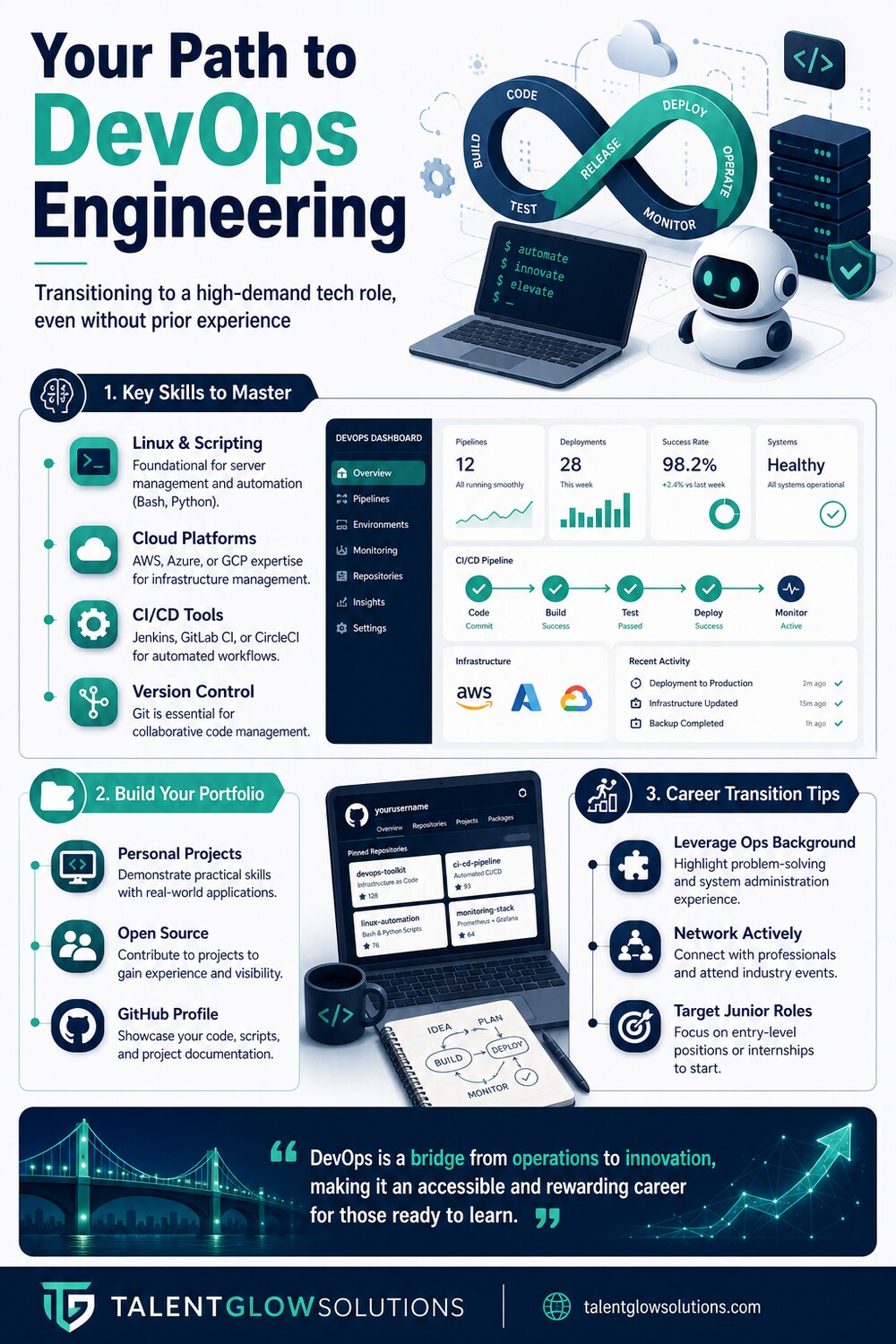
- Operating Systems (Linux): Proficiency in Linux command-line interface is crucial. Most servers and cloud environments run on Linux, making this a non-negotiable skill.
- Scripting Languages: Learn at least one scripting language like Python, Bash, or PowerShell. These are used for automation, system administration, and managing infrastructure.
- Networking Basics: Understand fundamental networking concepts such as TCP/IP, DNS, HTTP, and firewalls. This knowledge is essential for troubleshooting connectivity and security issues.
- Version Control (Git): Git is the industry standard for managing code changes. You'll need to be comfortable with branching, merging, and collaborative workflows.
How Can You Leverage Your Operations Background?
If you have a background in IT operations, helpdesk, or technical support, you already possess transferable skills that are highly valuable in DevOps. Your experience in troubleshooting, incident management, and understanding system behavior provides a unique advantage. These roles often involve critical thinking and problem-solving under pressure, which are core competencies for a DevOps engineer.
- Problem Solving: Your experience in diagnosing and resolving system issues directly translates to identifying and fixing problems in CI/CD pipelines.
- System Administration: Managing servers, user accounts, and permissions in previous roles is a strong foundation for infrastructure management in DevOps.
- Communication: Effectively communicating technical issues to non-technical stakeholders is a vital skill for collaborating between development and operations teams.
- Incident Management: Understanding how to respond to and mitigate system outages prepares you for maintaining highly available systems.
Essential DevOps Tools and Technologies to Learn
Mastering key DevOps tools and technologies is critical for practical application. While the landscape is vast, focusing on a few core categories will give you a strong start. Hands-on experience with these tools will significantly boost your resume.
| Category | Key Tools to Learn | Why It's Important | Stand-Alone Value |
|---|---|---|---|
| Cloud Platforms | AWS, Azure, Google Cloud | Provides scalable infrastructure for hosting applications and services. | Managing cloud resources, deploying applications to the cloud. |
| CI/CD | Jenkins, GitLab CI, CircleCI | Automates the software build, test, and deployment process. | Setting up automated pipelines for code changes, reducing manual errors. |
| Containerization | Docker, Kubernetes | Packages applications and their dependencies for consistent deployment. | Deploying and managing containerized applications, improving portability. |
| Infrastructure as Code | Terraform, Ansible, Chef, Puppet | Manages and provisions infrastructure through code, ensuring consistency. | Automating infrastructure setup, replicating environments quickly and reliably. |
| Monitoring | Prometheus, Grafana, ELK Stack | Collects and visualizes system and application performance metrics. | Identifying performance bottlenecks, ensuring system health and uptime. |
Building a Strong Portfolio and Gaining Experience
Even with no direct experience, building a robust portfolio is essential to showcase your abilities. Practical projects demonstrate your understanding of DevOps principles and tools. Recruiters look for candidates who can apply their knowledge to real-world scenarios.
- Personal Projects: Create end-to-end projects that involve setting up a CI/CD pipeline, deploying an application to the cloud, or automating a task using scripting. Document your process thoroughly on GitHub.
- Open Source Contributions: Contribute to open-source projects. This not only builds your portfolio but also exposes you to collaborative development workflows and best practices.
- Labs and Practice Environments: Utilize online labs (e.g., AWS Free Tier, Google Cloud Free Tier) or set up virtual machines to practice with various tools and configurations.
- Certifications: While not always mandatory, vendor-specific certifications (e.g., AWS Certified SysOps Administrator, Azure DevOps Engineer Expert) can validate your skills and commitment.
How Can Training Programs Help?
Structured training programs can significantly accelerate your journey to become a DevOps engineer with no experience. Programs like those offered by TalentGlowSolutions provide mentor-led, project-based learning that focuses on practical application. This approach ensures you gain hands-on experience with the tools and methodologies used in the industry.
TalentGlowSolutions offers a comprehensive curriculum designed to equip learners with the necessary skills for a DevOps career. Through project-based learning, you'll work on real-world scenarios, building a portfolio that demonstrates your capabilities to potential employers. Our mentor-led approach means you receive personalized guidance and support throughout your learning journey, helping you navigate complex concepts and master practical applications.
What About Job Placement and Support?
Securing your first DevOps role requires more than just technical skills; it also involves effective job search strategies. Many training providers offer placement assistance to help graduates transition into the workforce. This support often includes resume building, interview preparation, and networking opportunities.
At TalentGlowSolutions, we provide 100% placement assistance, which includes guidance on crafting compelling resumes, preparing for technical interviews, and connecting with potential employers. We do not guarantee a job, but our dedicated support aims to maximize your chances of securing an entry-level position. This mentorship and career guidance can be invaluable when you're starting a new career path.
What is the Career Outlook for DevOps Engineers?
The career outlook for DevOps engineers remains exceptionally strong. The demand for these professionals continues to grow as more companies adopt agile and cloud-native practices. This sustained growth means numerous opportunities for those entering the field. According to softwareoasis.com, job postings for DevOps engineers have grown by 18% annually since 2020, highlighting the expanding need for these specialized skills.
Starting as a junior DevOps engineer, you can progress to roles like Senior DevOps Engineer, Site Reliability Engineer (SRE), or even an Architect position. The continuous evolution of technology also means a path of constant learning and skill development, ensuring long-term career viability and growth.
What are the Typical Salary Expectations for a Junior DevOps Engineer?
Salary expectations for a junior DevOps engineer can vary significantly based on location, company size, and specific skill set. While it's challenging to provide exact figures without knowing these variables, entry-level DevOps roles generally offer competitive compensation packages. As you gain more experience and specialize in certain areas, your earning potential will naturally increase.
To understand potential earnings, research current job postings in your target region and industry. Look at the responsibilities listed for junior DevOps roles and compare them with your developing skill set. Many online salary aggregators also provide ranges, but these should be used as a general guide rather than a definitive number. Focus on building strong skills and a compelling portfolio, and the compensation will follow.
How Long Does it Take to Become a DevOps Engineer with No Experience?
The timeline to become a DevOps engineer with no experience can vary, but generally, it takes several months of dedicated study and practice. For instance, a focused individual can acquire foundational skills and complete practical projects within 6 to 12 months. This period often involves intense self-study, participation in bootcamps, or structured training programs.
The speed of your progress will depend on factors like your learning style, the amount of time you can dedicate daily, and your prior technical aptitude. Consistency in learning and hands-on application of concepts are more important than rushing through material. Building a strong portfolio of projects and actively networking can help shorten the job search phase once your skills are developed.
How Do I Get My First DevOps Job Without Experience?
Getting your first DevOps job without prior experience requires a strategic approach that emphasizes your acquired skills and demonstrable projects. Focus on showcasing what you can do, rather than what you've done in a formal role.
- Highlight Transferable Skills: Emphasize your problem-solving, analytical, and system administration skills from previous roles.
- Showcase Projects: Your GitHub profile should be meticulously maintained, featuring all your personal and open-source projects with clear documentation.
- Network Aggressively: Attend virtual and in-person meetups, conferences, and webinars. Connect with professionals on LinkedIn and seek informational interviews.
- Tailor Your Resume and Cover Letter: Customize each application to the specific job description, highlighting how your skills and projects align with their requirements.
- Prepare for Technical Interviews: Practice common DevOps interview questions, including scenarios related to Linux, scripting, cloud, and CI/CD tools.
- Consider Internships or Junior Roles: These positions are designed for individuals with less experience and can be an excellent entry point into the field.
Your journey to becoming a DevOps engineer, even without prior experience, is achievable with dedication and the right approach. Focus on skill development, building a strong practical portfolio, and strategic job searching. The demand is there, and with the right preparation, you can carve out a successful career in this dynamic field.
Sources
Frequently asked questions
What is the average salary for a junior DevOps engineer?
Salary for a junior DevOps engineer varies widely by location, company, and specific skills. Researching current job postings in your target area and industry will provide the most accurate local estimates.
What is the difference between DevOps and SRE?
DevOps is a set of practices that combines software development and IT operations to shorten the development lifecycle and provide continuous delivery. Site Reliability Engineering (SRE) is a specific implementation of DevOps, focusing on using software engineering principles to automate IT operations tasks and ensure system reliability.
Do I need a degree to become a DevOps engineer?
While a degree can be beneficial, it is not strictly necessary. Many successful DevOps engineers come from diverse backgrounds, leveraging self-study, bootcamps, and certifications to gain the required skills. Practical experience and a strong portfolio often weigh more heavily than formal education.
Which programming language is best for DevOps?
Python is widely considered one of the best programming languages for DevOps due to its versatility, extensive libraries, and readability, making it ideal for automation, scripting, and interacting with APIs. Bash scripting is also fundamental for command-line automation.
Can I transition from an IT support role to DevOps?
Absolutely. IT support roles provide a strong foundation with transferable skills in troubleshooting, system administration, and problem-solving. These experiences are highly valuable in a DevOps context, making the transition feasible with focused skill development in DevOps tools and practices.
Ready to launch your career?
Explore TalentGlowSolutions's mentor-led programs to get the support and project-based experience you need to launch your DevOps career.
Explore Programs Talk to us