Career Guidance
SAP Module Roadmap: MM or EWM for Warehouse & Logistics?
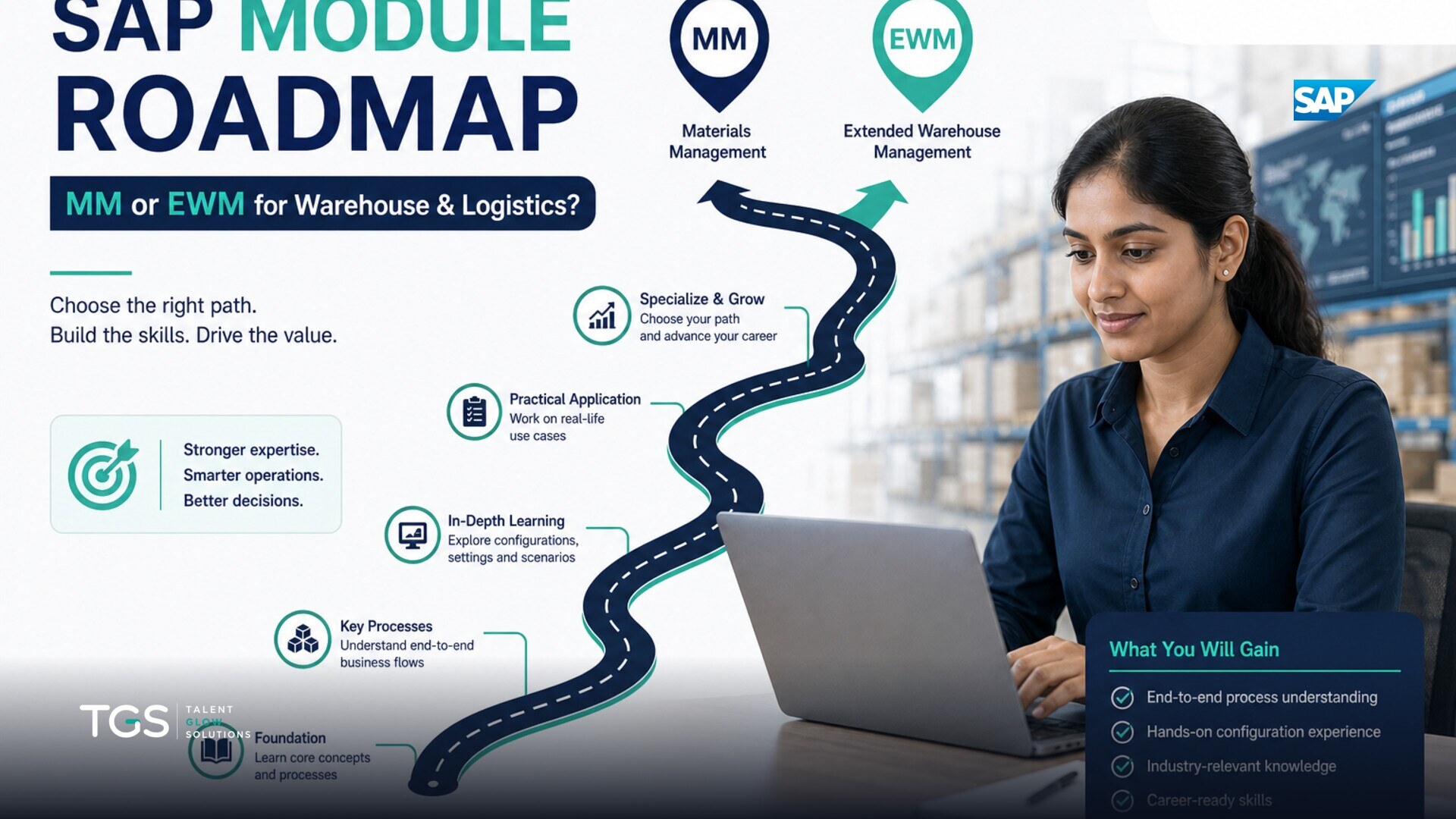
Embarking on an SAP career in warehouse and logistics presents exciting opportunities. Understanding the different SAP modules available is crucial for charting your professional path. This guide will help you navigate the SAP module roadmap for someone who wants to work in warehouse and logistics, specifically comparing SAP Materials Management (MM) and SAP Extended Warehouse Management (EWM).
What is SAP Materials Management (MM)?
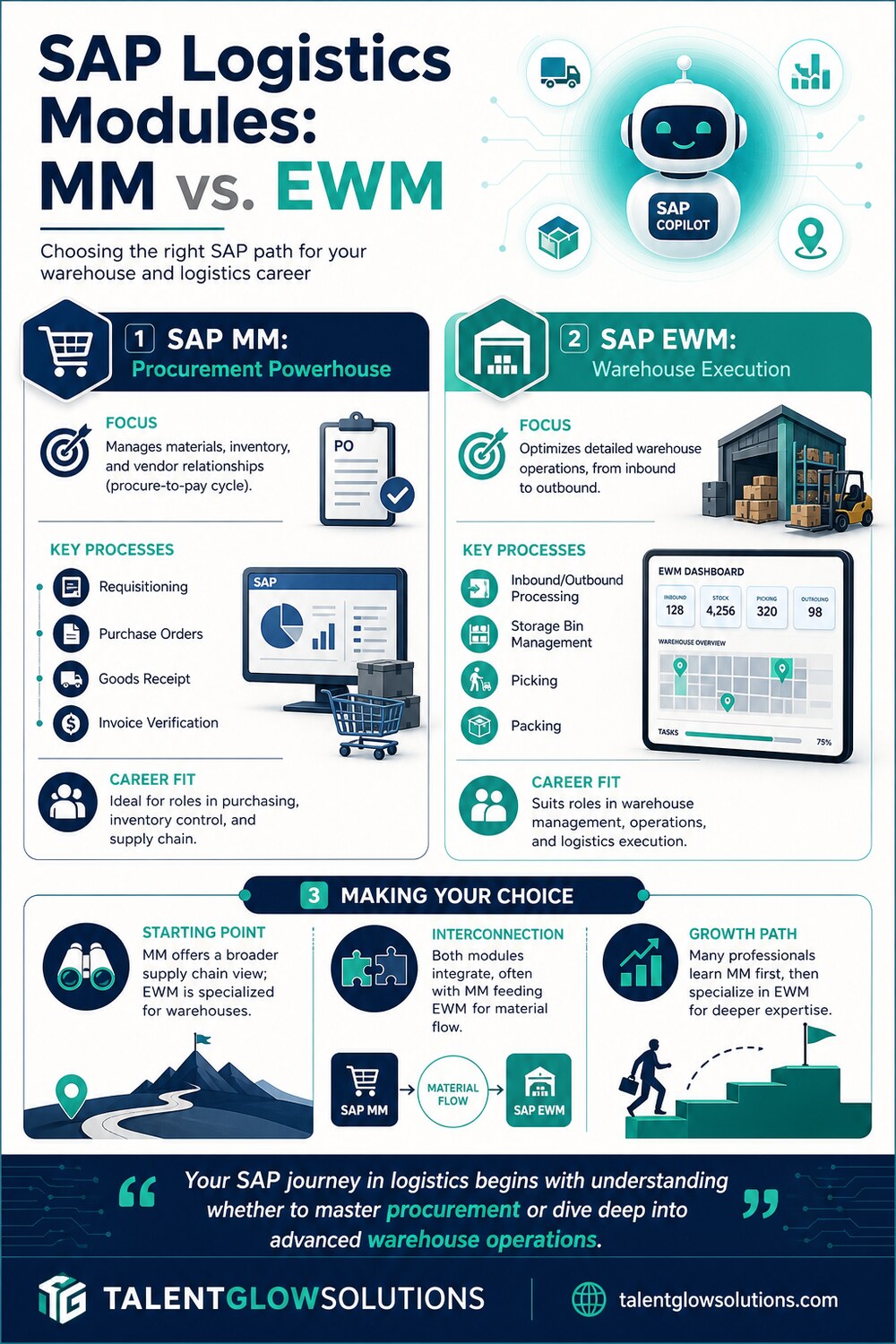
SAP MM is a core module that handles all aspects of materials management within an organization. It covers the entire procure-to-pay business process, ensuring that materials are available when needed and managed efficiently. This includes everything from purchasing goods and services to managing inventory.
Key functions within SAP MM include defining material types, managing vendor master data, creating purchase requisitions and purchase orders, processing goods receipts, and handling invoice verification. It's fundamental for businesses to maintain a smooth flow of materials and optimize their supply chain operations.
What are the main processes covered by SAP MM?
SAP MM encompasses several critical processes essential for managing materials and procurement. These processes ensure that businesses can acquire the necessary goods and services efficiently and cost-effectively. Understanding these workflows is vital for anyone working with SAP MM.
- Procurement Process: This involves creating purchase requisitions, converting them into purchase orders, and sending them to vendors. It's the starting point for acquiring external materials.
- Goods Receipt: When purchased materials arrive, this process records their receipt into the inventory. It ensures that the quantity and quality of received goods match the purchase order.
- Inventory Management: This function tracks material stocks, manages physical inventory, and handles material movements within the warehouse or storage locations. It ensures accurate stock levels.
- Invoice Verification: This step involves checking vendor invoices against purchase orders and goods receipts. It's crucial for ensuring correct payments and resolving discrepancies.
What is SAP Extended Warehouse Management (EWM)?
SAP EWM is an advanced and highly specialized module designed for managing complex warehouse operations. While SAP MM handles the broader inventory, SAP EWM dives deep into the physical execution of warehouse processes. It provides detailed control over material flow and storage within a warehouse.
EWM offers sophisticated functionalities for optimizing warehouse layouts, managing storage bins, coordinating material handling equipment, and executing tasks like picking, packing, and shipping. It's particularly beneficial for large-scale warehouses with high volumes and intricate logistics requirements.
What are the key functionalities of SAP EWM?
SAP EWM provides granular control over every aspect of warehouse operations. Its advanced features go beyond basic inventory tracking to optimize efficiency, accuracy, and throughput in complex warehouse environments. Professionals in EWM roles utilize these functionalities daily.
- Inbound Processing: Manages the receipt of goods, including scheduling appointments, deconsolidation, and putaway strategies. It optimizes how materials enter the warehouse.
- Outbound Processing: Handles the preparation and dispatch of goods, covering picking, packing, staging, and loading. This ensures efficient order fulfillment.
- Storage and Internal Operations: Optimizes storage bin management, inventory counting, and internal material movements. It maximizes space utilization and operational flow.
- Resource Management: Assigns and manages warehouse resources, including labor and material handling equipment. This improves overall warehouse productivity.
SAP MM vs. SAP EWM: A Comparison for Logistics Professionals
Choosing between SAP MM and SAP EWM depends largely on your specific career aspirations within warehouse and logistics. Both modules are crucial, but they address different aspects of the supply chain. Here’s a comparison to help you decide:
| Feature | SAP MM | SAP EWM |
|---|---|---|
| Primary Focus | Procure-to-pay cycle, inventory, vendors | Detailed warehouse execution, bin-level ops |
| Scope | Broader supply chain and material flow | Specialized, in-depth warehouse management |
| Key Roles | Purchasing, inventory controller, buyer | Warehouse manager, logistics specialist, EWM consultant |
| Integration | Often integrates with SD, FICO, and EWM | Integrates closely with MM, SD, and PP |
| Complexity | Foundational, covers core processes | Highly specialized, advanced optimization |
For someone beginning their SAP module roadmap for someone who wants to work in warehouse and logistics, MM offers a broader understanding of how materials move through a company. EWM provides deep expertise in the physical handling and storage of those materials within a warehouse.
Which module should you start with for a logistics career?
The ideal starting module often depends on your existing background and long-term career goals. If you have a background in general logistics, supply chain, or purchasing, starting with SAP MM can provide a strong foundational understanding of material flow and procurement principles. This module offers a comprehensive view of how a company acquires and manages its materials before they even reach a specialized warehouse.
If your interest is specifically in optimizing warehouse operations, managing complex storage solutions, or working with automated warehousing systems, then SAP EWM might be a more direct fit. However, many professionals find that a solid grasp of MM enhances their EWM capabilities, as EWM relies on material master data and procurement processes managed in MM.
Can you learn both SAP MM and EWM?
Yes, learning both SAP MM and EWM is highly beneficial and often recommended for a comprehensive logistics career. These modules are deeply integrated, and understanding how they interact can make you a more versatile and valuable SAP professional. Many advanced logistics roles require expertise across both procurement and detailed warehouse execution.
Starting with MM provides the foundational knowledge of material master data, purchasing, and basic inventory management. Then, progressing to EWM allows you to specialize in the intricacies of warehouse operations. This dual expertise positions you for a wide range of roles, from supply chain consultants to logistics architects.
How TalentGlowSolutions supports your SAP logistics journey
At TalentGlowSolutions, based in Hebbal, Bengaluru, we understand the importance of choosing the right SAP module for your career. Our mentor-led SAP training programs, including MM and EWM, are designed to provide practical, project-based experience on a live S/4HANA system. This hands-on approach ensures you gain relevant skills.
We focus on equipping learners with the knowledge needed to excel in their chosen SAP domain. Our programs include comprehensive curriculum, real-world scenarios, and dedicated mentorship. We provide 100% placement support, offering guidance and resources to help you connect with potential employers, though we do not guarantee a job.
What is the cost structure for SAP training?
Understanding the investment required for SAP training is a common concern for learners. TalentGlowSolutions structures its training fees to reflect the comprehensive nature of our programs, including mentor-led instruction, live system access, and placement support. We encourage prospective learners to contact us directly for detailed information tailored to their specific module of interest and program duration.
During a consultation call, our team can provide a clear breakdown of the program costs. This allows you to understand the value proposition and make an informed decision about your career investment. We focus on transparency and answering all your questions regarding the financial commitment.
Next Steps in Your SAP Logistics Career
Choosing between SAP MM and SAP EWM is a significant step in shaping your logistics career. Both modules offer distinct advantages and lead to different specializations. MM provides a broad understanding of procurement and inventory, while EWM offers deep expertise in advanced warehouse management.
Consider your career aspirations: do you want to manage the flow of goods from suppliers to your company, or do you want to optimize every movement within the warehouse itself? Many successful SAP professionals ultimately gain expertise in both, leveraging their MM knowledge to enhance their EWM skills. This dual knowledge creates a powerful skill set for the evolving logistics landscape.
Ultimately, the best SAP module roadmap for someone who wants to work in warehouse and logistics is one that aligns with your passion and career objectives. Investigate both, understand their interdependencies, and choose the path that excites you most. With dedicated training, you can build a rewarding career in SAP logistics.
Frequently asked questions
What is the main difference between SAP MM and SAP EWM?
SAP MM focuses on materials management, including purchasing, inventory, and vendor relationships (the procure-to-pay cycle). SAP EWM is specialized for detailed warehouse operations like inbound/outbound processing, storage bin management, picking, and packing, providing granular control within the warehouse itself.
Which SAP module is better for a beginner in logistics?
For a beginner in logistics, SAP MM often provides a broader foundational understanding of supply chain and procurement processes. It covers how materials are acquired and managed before entering a specialized warehouse. EWM is more specialized and often pursued after gaining a basic understanding of logistics principles.
Can I get a job in logistics with only SAP MM knowledge?
Yes, a strong understanding of SAP MM can lead to roles in purchasing, inventory control, and supply chain coordination. Many companies rely heavily on MM for their procurement and basic inventory management. However, combining it with EWM can open up more specialized warehouse management positions.
Is SAP EWM difficult to learn?
SAP EWM is considered more complex than SAP MM due to its highly specialized and granular control over intricate warehouse processes and automation. It requires a deeper understanding of logistics execution and often benefits from prior knowledge of basic material flow concepts from modules like MM.
Do SAP MM and EWM integrate with each other?
Yes, SAP MM and EWM are highly integrated. MM provides the material master data and procurement processes that feed into EWM for warehouse execution. For example, a goods receipt processed in MM will trigger subsequent putaway tasks in EWM, demonstrating their symbiotic relationship.
Ready to launch your career?
Propel your logistics career forward with TalentGlowSolutions's mentor-led SAP training, designed to give you the practical skills and support you need.
Explore Programs Talk to us