Career Roadmap
How to Become an SAP SD Consultant with No Experience: Your Roadmap
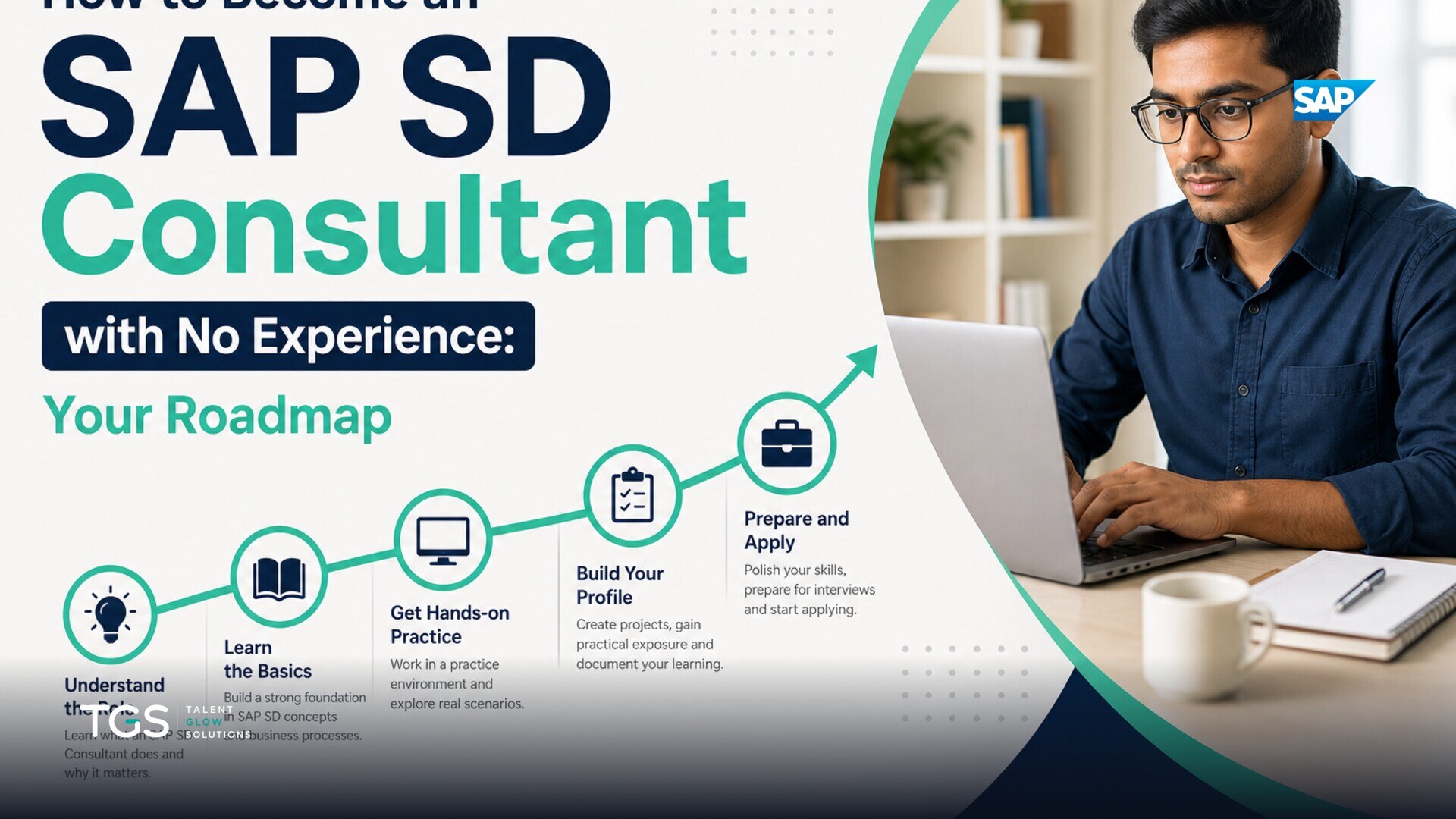
Embarking on a new career path can feel daunting, especially when it involves specialized software like SAP. However, if you're looking to become an SAP SD consultant with no experience, your existing background in sales, marketing, or customer operations can be a significant advantage. This guide will walk you through the essential steps and knowledge areas needed to transition successfully into an SAP SD consulting role.
What is SAP SD and Why is it Good for You?
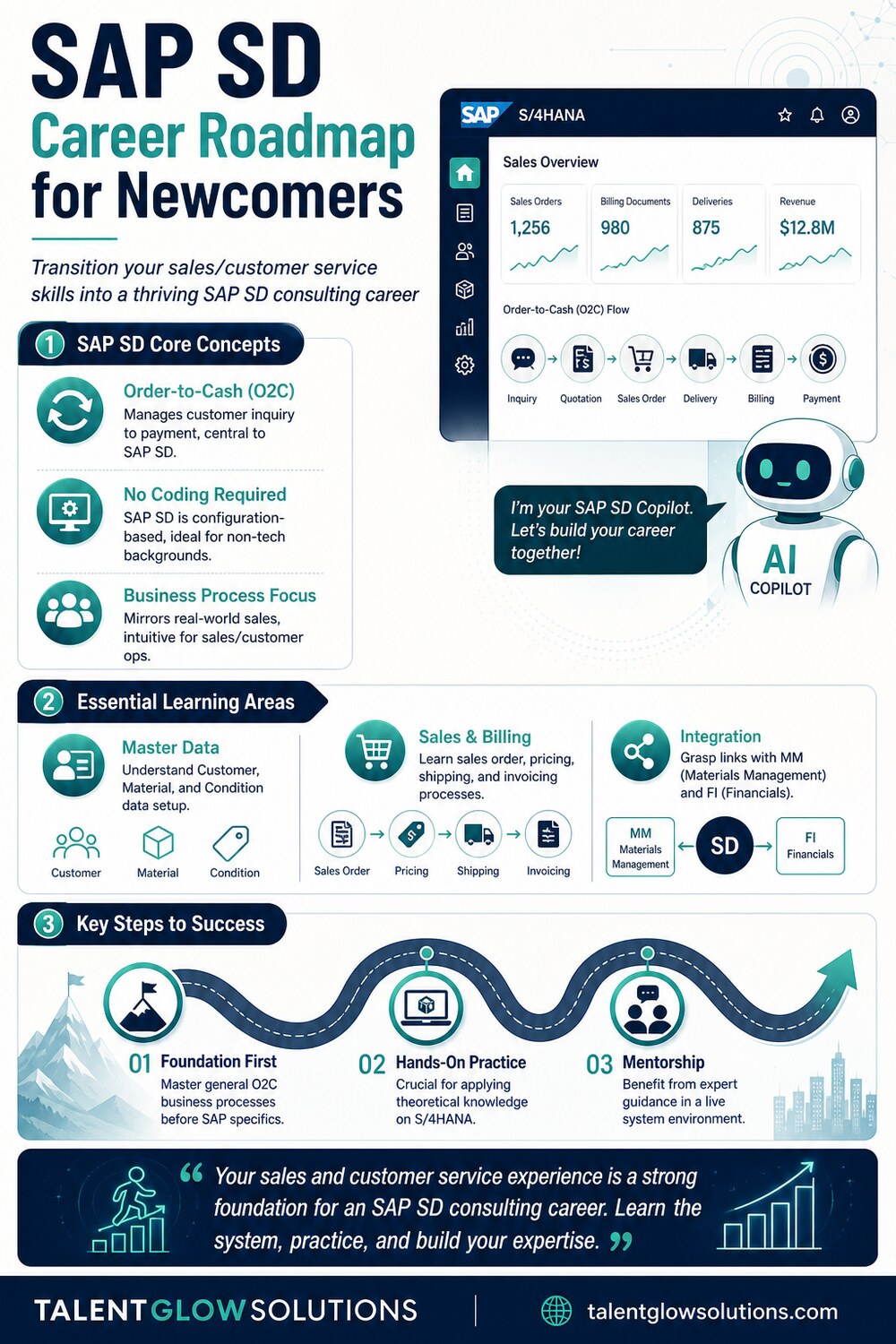
SAP SD, or Sales and Distribution, is a functional module within SAP that manages the entire Order-to-Cash (O2C) process. This spans from the initial customer inquiry all the way to final payment. Unlike some technical SAP modules, SD typically does not require coding knowledge; it is primarily configuration-based. This means you'll be setting up and customizing the system's existing functionalities rather than writing code from scratch.
Individuals with backgrounds in sales, marketing, or customer operations often find SAP SD intuitive. The module's processes closely mirror real-world business workflows you might already be familiar with. This natural alignment makes it an excellent choice for those with an MBA/BBA, or practical experience in sales or order management, looking to pivot into a tech-adjacent consulting role.
What is the Order-to-Cash Process in SAP SD?
Understanding the Order-to-Cash (O2C) process is fundamental to SAP SD. This end-to-end cycle represents how a company receives and processes customer orders, delivers products or services, and collects payment. It's the backbone of sales and revenue generation.
The core SAP SD Order-to-Cash process involves several critical steps. These steps are often performed using specific transaction codes within the SAP system, which you will learn during your training. Mastering each stage is key to becoming a proficient consultant.
Here’s a breakdown of the key O2C steps:
- Customer Inquiry (VA11): Initial contact from a customer about products or services.
- Quotation (VA21): Providing a formal offer to the customer based on their inquiry.
- Sales Order (VA01): Creating a document that records the customer's purchase request.
- Availability Check: Confirming if the requested goods are in stock or can be produced.
- Credit Check: Assessing the customer's creditworthiness to approve the order.
- Delivery Creation (VL01N): Initiating the process to ship the goods.
- Picking: Selecting the correct items from warehouse inventory.
- Packing: Preparing the goods for shipment.
- Post Goods Issue (PGI): Officially recording that goods have left the warehouse.
- Billing (VF01): Generating an invoice for the customer.
- Accounting Document: Automatically created to record the financial transaction.
- Customer Payment: Receiving funds from the customer.
What Core Topics Should You Learn in SAP SD?
To become a competent SAP SD consultant, you need to master several key topics. These areas cover the essential functionalities and configurations within the module. A structured learning approach will ensure you build a comprehensive skill set.
Key topics include:
- Master Data: This involves understanding and configuring essential data elements like Customer Master (details about your customers), Material Master (details about your products), and Condition Master (pricing and discounts).
- Sales Order Management: Learning how to create, process, and manage various types of sales orders, including standard orders, rush orders, and cash sales.
- Pricing and Conditions: Understanding how pricing procedures are configured, including base prices, discounts, surcharges, and taxes.
- Shipping and Delivery: Managing the logistics of getting products to customers, including delivery document creation, picking, packing, and goods issue.
- Billing and Invoicing: Creating accurate invoices, credit memos, and debit memos, and understanding how these integrate with financial accounting.
- Credit Management: Setting up and managing customer credit limits and credit checks to minimize financial risk.
- Integration with Other Modules: Grasping how SAP SD interacts with other modules like Materials Management (MM) for inventory and procurement, and Financial Accounting (FI) for accounting entries and reporting.
How Can You Get Hands-On Practice with SAP SD?
Theoretical knowledge alone is insufficient for becoming job-ready as an SAP SD consultant. Hands-on practice using a real or trial SAP S/4HANA system is absolutely essential. This practical experience allows you to apply what you've learned and troubleshoot issues, much like you would in a real consulting role.
Actively working through scenarios on a live system builds confidence and reinforces understanding. It's crucial for performing well in interviews and for your day-to-day work. Many training programs, like those at TalentGlowSolutions, offer mentor-led, project-based training on a live S/4HANA system. This allows you to gain practical experience under expert guidance, simulating real-world project challenges.
What are the Prerequisites to Learn SAP SD?
Before diving into the specifics of SAP SD, a foundational step is to first understand general business processes. This includes a solid grasp of the Order-to-Cash cycle, sales workflows, and effective customer relationship handling. This business context makes learning the SAP system much easier, as the software is designed to automate these very processes.
Often, individuals with a sales, marketing, or customer operations background already possess this foundational understanding. This prior exposure to business logic makes the transition to SAP SD more seamless. Focus on strengthening your knowledge of how businesses manage sales and customer interactions before delving into the technical configurations of SAP.
How Long Does it Take to Become Job-Ready?
The timeline to become job-ready as an SAP SD consultant can vary, but a dedicated approach accelerates the process. It involves several phases, from foundational learning to practical application. Expect to commit significant time to both theoretical study and hands-on practice. Regularly reviewing and practicing the concepts is more important than rushing through them.
Many aspiring consultants find that structured training programs, combined with self-study and consistent practice, provide the most efficient path. Remember that continuous learning is part of an SAP consultant's career, as the software evolves. Building a strong network and seeking mentorship can also significantly aid your journey.
FAQs About Becoming an SAP SD Consultant
Can I become an SAP SD consultant without any prior IT experience?
Yes, you can. SAP SD is a functional module that primarily deals with business processes like sales and distribution, and it is configuration-based, meaning it generally does not require coding. Your background in sales, marketing, or customer operations is often more relevant than direct IT experience.
What is the typical career path for an SAP SD consultant?
A typical career path starts with a junior consultant role, progressing to a functional consultant, then potentially a senior consultant, lead consultant, or even an architect role. Specializations within SD, such as pricing or credit management, are also common as you gain more experience and expertise.
How important is hands-on experience on a live SAP S/4HANA system?
Hands-on experience on a live SAP S/4HANA system is absolutely critical. Theoretical knowledge alone is insufficient for interviews and practical work. Employers seek candidates who can demonstrate practical application of concepts, troubleshoot issues, and navigate the system effectively.
Does TalentGlowSolutions offer placement assistance for SAP SD training?
Yes, TalentGlowSolutions offers placement assistance to help connect you with potential opportunities after completing your SAP SD training. We provide guidance and support in your job search, though we do not guarantee a job. Our focus is on equipping you with the skills and confidence to pursue your career goals.
What are the key skills for a successful SAP SD consultant?
Key skills include a deep understanding of the Order-to-Cash process, proficiency in SAP SD configuration, strong analytical and problem-solving abilities, good communication skills, and the capacity to bridge the gap between business requirements and SAP functionalities. Continuous learning and adaptability are also highly valued.
Sources
Frequently asked questions
Can I become an SAP SD consultant without any prior IT experience?
Yes, you can. SAP SD is a functional module that primarily deals with business processes like sales and distribution, and it is **configuration-based**, meaning it generally does not require coding. Your background in sales, marketing, or customer operations is often more relevant than direct IT experience.
What is the typical career path for an SAP SD consultant?
A typical career path starts with a junior consultant role, progressing to a functional consultant, then potentially a senior consultant, lead consultant, or even an architect role. Specializations within SD, such as pricing or credit management, are also common as you gain more experience and expertise.
How important is hands-on experience on a live SAP S/4HANA system?
**Hands-on experience** on a live SAP S/4HANA system is absolutely critical. Theoretical knowledge alone is insufficient for interviews and practical work. Employers seek candidates who can demonstrate practical application of concepts, troubleshoot issues, and navigate the system effectively.
Does TalentGlowSolutions offer placement assistance for SAP SD training?
Yes, TalentGlowSolutions offers **placement assistance** to help connect you with potential opportunities after completing your SAP SD training. We provide guidance and support in your job search, though we do not guarantee a job. Our focus is on equipping you with the skills and confidence to pursue your career goals.
What are the key skills for a successful SAP SD consultant?
Key skills include a deep understanding of the Order-to-Cash process, proficiency in SAP SD configuration, strong analytical and problem-solving abilities, good communication skills, and the capacity to bridge the gap between business requirements and SAP functionalities. Continuous learning and adaptability are also highly valued.
Ready to launch your career?
Ready to transform your sales and customer service expertise into an SAP SD consulting career? Explore TalentGlowSolutions's mentor-led training on a live S/4HANA system.
Explore Programs Talk to us